Path to the Foreground: Beyond Ambient Anonymity on the ‘Hearts of Space’ Radio Show
As I relaxed one evening with the Hearts of Space tape rolling, playing an episode titled “Song of Hope” from 1992, I entered a total state of relaxation and tranquility from the curation of pieces selected for that episode, the first one I’d ever listened to. About a half hour in, disappointment set in as I figured that I’d probably never figure out the titles of the episode’s selections. I would have to be content with listening to this tape again and again, allowing the pieces to forever perform in obscurity. I should have anticipated that the Hearts of Space host, Stephen Hill, would intervene at the end of the episode to provide detailed information on each track included on the program, citing works including Harold Budd, Tim Story, and Clode Hamelin. I’d become so accustomed to the continually interruptive style of typical radio hosts, which I assume Hill eschewed to avoid disrupting the transcendent states of his listeners. As the episode came to a close, I admired Hill’s attention to detail as a host because it sidestepped the anonymity that is all too common today with ambient genres. I’ve written multiple posts reflecting on how ambient musicians have their identities erased in today’s streaming landscape, a result of the over-reliance on background playlists so that songs pass by listeners without acknowledgement of the name, face, and personality behind their background music. Hearts of Space, both old episodes and new, is refreshing to listen to in contemporary society because of the program’s deep respect for the history and personality behind ambient music and its related genres. While ambient music has always been amenable to being in the background or supportive of another task the listener may engage in, as established by Brian Eno since Music for Airports, it was also never meant to be invisible.

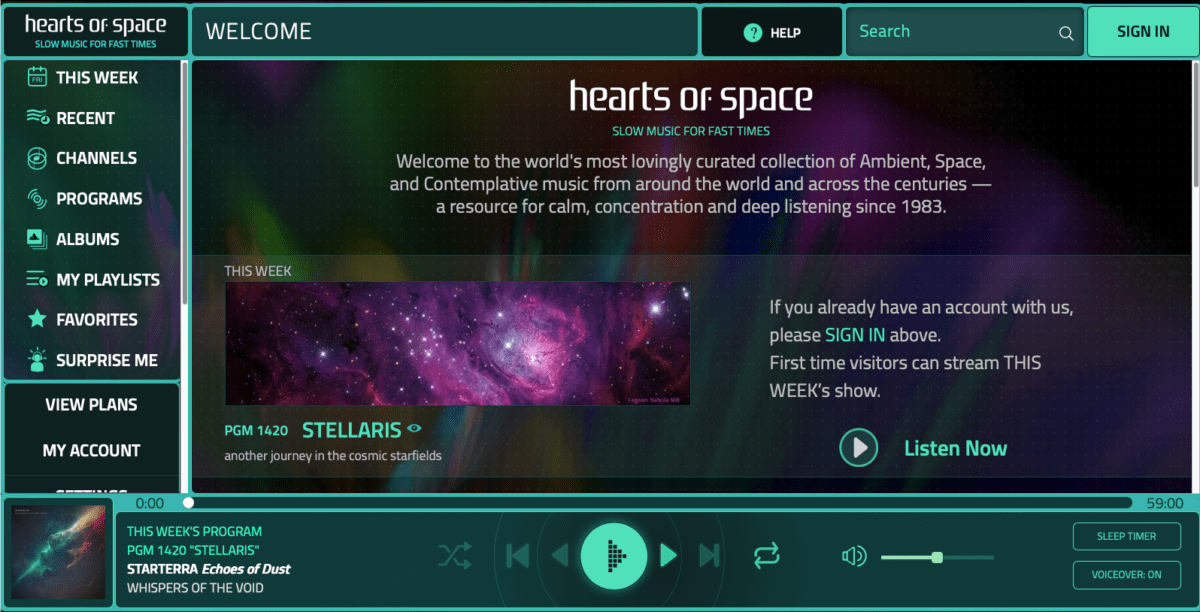
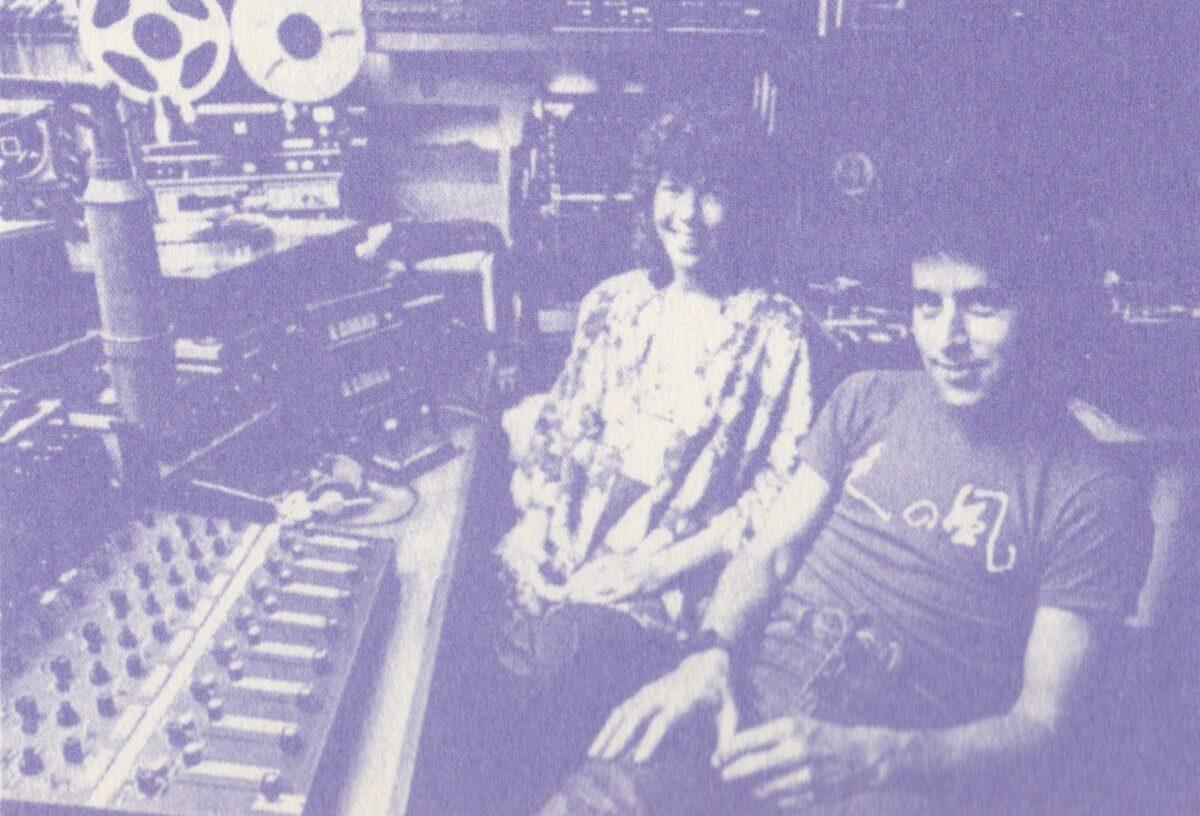
The Hearts of Space radio program began in 1973 as a weekly, late-night show hosted by Stephen Hill in the San Francisco Bay Area. The hourlong program provided uninterrupted “contemplative music” spanning genres such as ambient, classical, experimental, electronic, new age, and international music, bookended by a brief introduction and the concluding information about that week’s selections. Hearts of Space began national syndication on public radio beginning in 1983, hosted by both Hill and co-producer Anna Turner. The show still runs on almost 200 NPR affiliate stations, and they even began their own streaming service by providing web access to their archive as early as 1999. They also established their own record label in 1984 to carve out a space for their own releases of contemplative music. The introduction of Hearts of Space in the seventies and eighties was completely in-step with the broader new-age movement taking shape in the United States (and Western society more broadly), and coincides with the emergence of genres such as ambient and new age. However, Hill asserts that, “What’s now being called Ambient music is the latest chapter in the contemplative music experience. Electronic instruments have created new expressive possibilities, but the coordinates of that expression remain the same. Space-creating sound is the medium. Moving, significant music is the goal.” Hill didn’t view ambient music as indicative of some societal trend, but rather a chapter on a journey of contemplative music that extended back centuries and was continuing to move forward.
Hearts of Space has openly embraced the technological changes in recorded sound and radio that have transpired in the decades since the show began on terrestrial airwaves in the Bay Area. If anything, the program has been ahead of the curve, predicting the popularity of advancing listening models years ahead of others. Hearts of Space still has its own, very affordable, streaming service that creates its own sustainable ecosystem, allowing the ambient music featured on their show to circulate without the intervention of other streaming services that may exploit the genre. Writers such as Liz Pelly, who I often cite, have noticed how ambient music is one of the primary genres that major streaming services prey upon for their “lean-back,” passive listening model, stuffing background music playlists with ambient music by artists that may or may not exist, or who may have had their authentic identities hidden behind the facade of a ghost artist. In her book Mood Machine, she posed these difficult questions about Spotify and its treatment of contemplative music, “If people were mostly coming to the platform for lean-back playlists, would they even notice if top-shelf tracks disappeared from them? When listeners form regular behaviors around platform-controlled playlists, didn’t that make the artists disposable and interchangeable?” Much of ambient music listening via streaming services today encourages an extreme form of anonymity, wherein listeners are taught to ignore background music to the degree that a song may pass by unnoticed on a shuffled playlist without ever learning who put their craft into that music. While the goal of ambient music has always been intertwined with its ability to fade into the background, the stripping of identity that happens with modern streaming services causes a genre with immense artistic history and creative verve to be relegated to completely passive listening spaces and conflated with genres such as Muzak and white noise.
Since the beginning, Hearts of Space has not allowed ambient music to only fade into the background, but has respected the humanity behind a genre that allows for focus, contemplation, relaxation, or meditation, but also active transformation and reverence. Anna Turner and Stephen Hill’s book Music from the Hearts of Space: Guide to Cosmic, Transcendent and Innerspace Music accomplishes this feat as well, providing depth and attention to the artists, labels, and albums behind the selections from their late-night programs. Originally published in 1981, the guide encourages further exploration across a wide scope of niche ambient subgenres and broader genres that fit into the ambient scope. Sections span functions for the body, like “Cellular Wave Music” and “Restful and Relaxing,” historical genres like “Raga and Eastern Classical” and “Western Sacred,” and categories you might find labeled on a record store bin, such as “New Age” and “Space Jazz.” These categorizations are intriguing because they predate the highly specific forms of categorization typical of streaming playlists today. I wouldn’t be surprised to find a Spotify playlist titled, “Etheric Tropical” or “Cosmiscellany,” both chapters in this book.
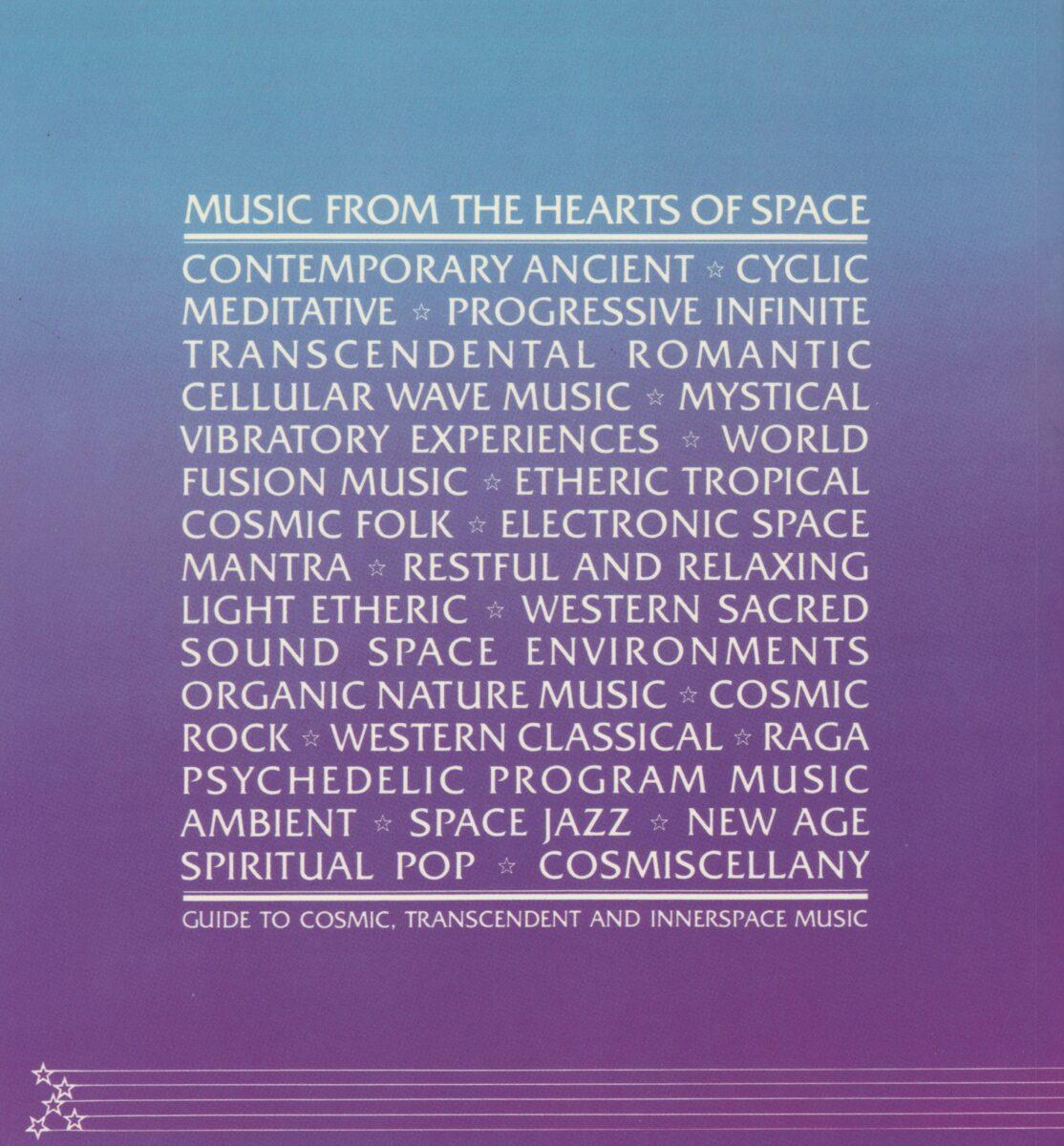
The descriptions behind all of these chapters echo the very human impulses of how we respond to music and place it in categories to make sense of it and share it with others. But this book still displays a form of care and attention towards music that is easily eroded today — Turner and Hill share their thoughts on each piece recommended in the book, include quotes about each genre from other contributors, and publish the guide as encouragement to the Hearts of Space listener to dive deeper, to visit the record store, to learn about the history and musicians behind the sounds, and experience their own emotional responses to what they hear. Each endeavor of the Hearts of Space crew, whether it be the radio program, guidebook, record label, streaming service, or website, is brimming with passion for contemplative music that is infectious to the listener. Amidst it all, Hearts of Space carves its path to the foreground when other forces wish to push ambient music to the background.
– Hannah Blanchette
April 29, 2026 | Blog