How a Leaky Pipe Helped Me Move the Analog Out of the Periphery of My Life
I wrote a blog post earlier this year that reflected on Erik Satie’s concept of furniture music and the decline of interior decorating that centered physical media. A month later, I stumbled across a Real Simple article providing tips on how to create an “analog room.” Only a few weeks after that, I encountered an Architectural Digest article titled, “The Analog Bedroom Is a Return to Stillness.” All of a sudden, I was seeing the inverse of what I had observed in my post. With the rise in analog’s trendiness, designers were once again shaping rooms around physical media, and encouraging readers to not only include it in their everyday spaces, but to even devote special areas to the analog. People’s aversion to digital media’s overbearing presence in their lives is increasingly not simply conceptual, but manifesting as the alteration of physical space to once again accommodate the analog’s insistent presence. While the digital transforms every aspect of daily life into something invisible, the analog takes up space and demands attention. Redesigning a place so that it makes room for the analog isn’t simply a design choice, but alters your attention so it is drawn to the objects around you, not simply the specters of these objects in digital space.
While I often consider digital space to be ephemeral and transient, I was reminded recently how fragile physical space can be. A few months ago now, I came home to a leaking pipe in my bathroom ceiling, which was rapidly escalating to damage on the wall that my bedroom shares with the bathroom. The subsequent several weeks were filled with days of constant disruption as the damage was assessed, plumbing was replaced, and walls were repaired. As someone who relies heavily on my home for creative work as well as a restful sanctuary, those weeks were incredibly difficult for me mentally. One of my solutions was to use my noise canceling earbuds whenever the drill was running or hammers were banging. I retreated into a small area of my home that was not in repair and my world closed in upon itself, the sounds around me eradicated and my perception limited to my phone and my television.
But out of this time in my life, I also made one of the best developments for the layout of my home and how my record collection listening integrates with my everyday living. The disturbances to the flow of my home, from rugs rolled up in corners to piles of bedroom miscellany stacked up by the living room window, caused me to explore the space with fresh eyes. Sometimes it takes everything being toppled upside down to finally see something clearly. For the many years I have owned the bookshelf speakers that I have hooked up to my turntable, I have always found that due to circumstance, they had to be placed at an odd angle from my living room seating. The sound waves would shoot past me, instead of towards where I sit and listen. In a moment of ingenuity, I finally saw the optimal placement for my speakers on the sides of my television. Not only would the sound be aimed directly towards me for the first time since I’d owned a turntable, but I also managed to set up the speakers for my vinyl, television, and CDs. This subtle rearrangement has completely transformed my listening habits in the months since, centering listening to my record collection in a new way. When I come home now, I often snap on my speakers by the front door like a light switch, the room always prepared for sound.
Because of the repairs going on in my apartment, I didn’t really get to enjoy this luxury until the final day. As the weeks had passed, I noticed that the man doing the repairs often listened to jazz while going about his work. I’d been having a real itch to listen to Herbie Hancock’s Head Hunters for days, so on his last day of repainting my bedroom wall, I grabbed Head Hunters off the shelf and put my speakers to the test. A few minutes into “Chameleon,” we had started talking about the repairs and he said, “Do I know this? This sounds so familiar. I definitely know this.” Upon realizing it was Head Hunters,his face lit up with recognition and he began recalling memories of the record and how the drums in “Chameleon” made him want to become a drummer. I pulled the needle back so we could start the record over and we talked for the length of the whole album about him learning the drums as a kid in the late sixties, his experiences with his band, and the jam sessions he holds with his grandkids.
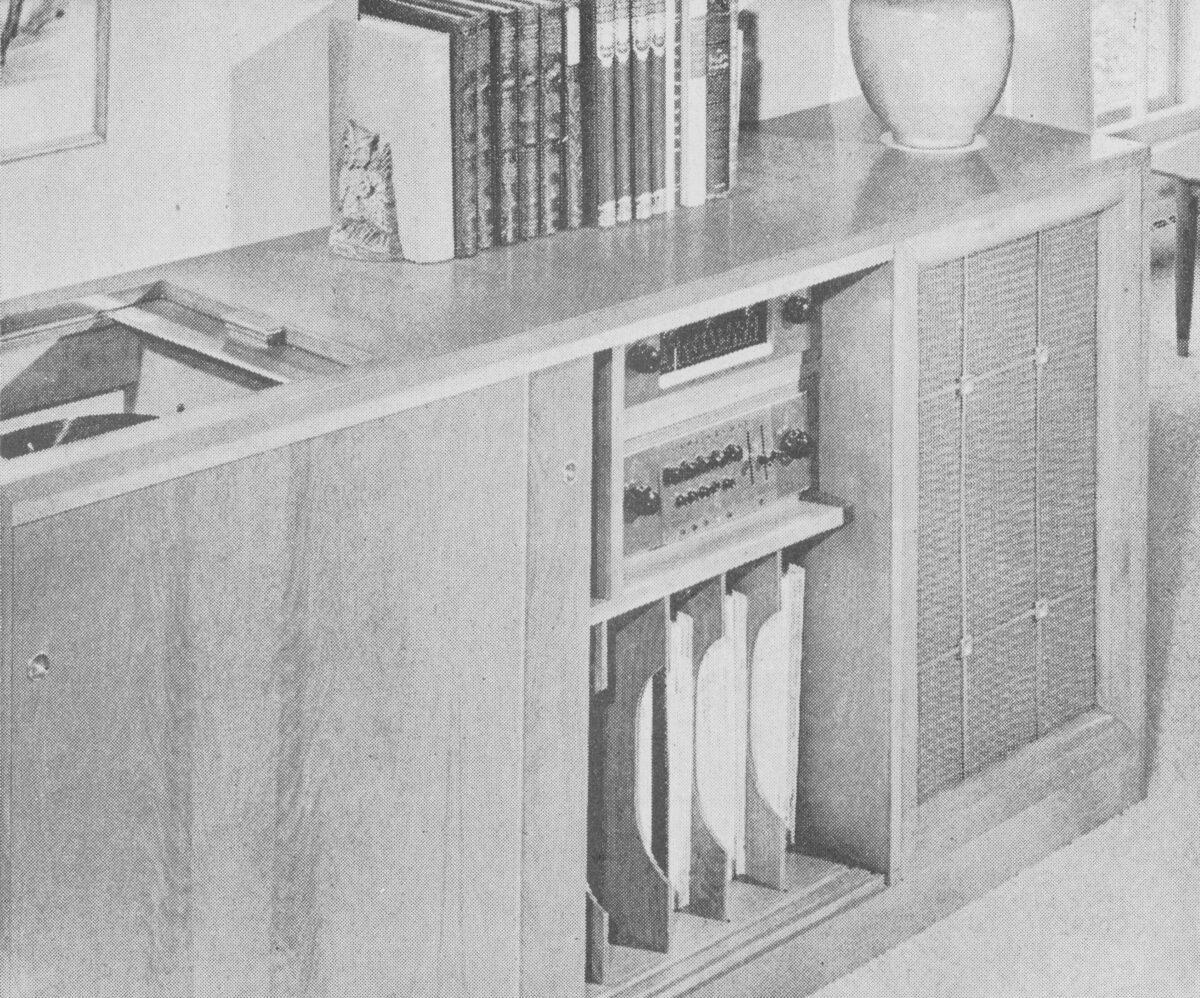
The whole conversation reminded me how records forge community in ways that are irreplaceable with anything else, a stark contrast to the isolation I’d plunged into when I used the noise canceling earbuds to shut out the chaos of the repairs. Maybe necessary at the time, but ultimately lonely. The experience of listening to Head Hunters, with the person who made my apartment a home again, had cleansed the space of the stress and anxiety that had overtaken my home for weeks, and embarked me upon a new way of existing within it. Centering those speakers in my home and making my record collection as integral to my daily life as any other form of media has supplied it with a newfound vibrancy and presence of mind. I finally feel like I understand that little Better Homes and Gardens pamphlet from the seventies I referenced in my blog from January, how their recommendations for incorporating your records, books, and art into your space transforms not only the environment you live in, but how you engage with media as a whole. No longer is the analog simply at the periphery of my life — it is front and center.
– Hannah Blanchette
July 10, 2026 | Blog