Metamorphosis: Beatriz Ferreyra and the Value of Developing a Compositional Philosophy
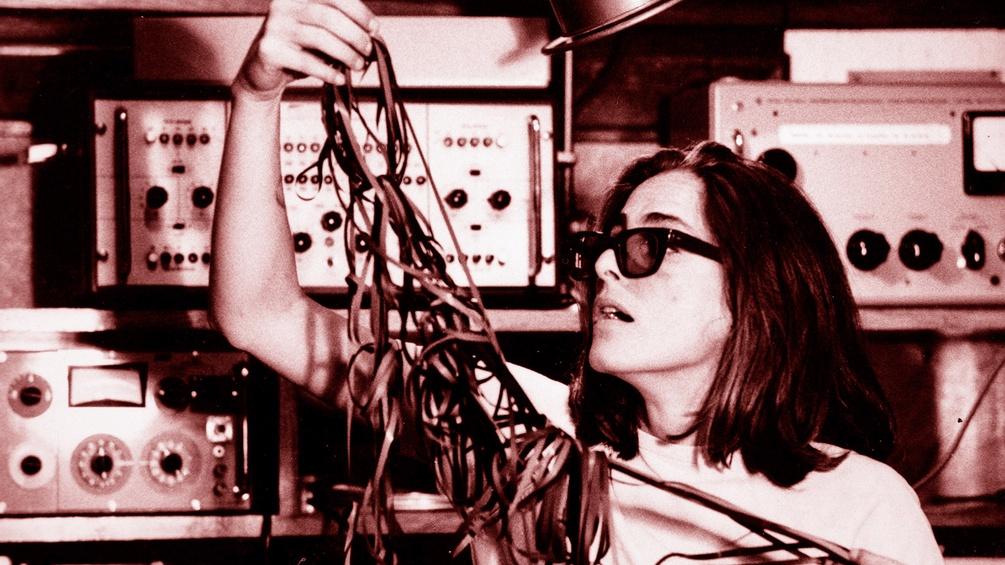
Beatriz Ferreyra’s name is always one that has caught my attention while digging around experimental music bins, finding myself drawn to her connections to the Groupe de Recherches Musicales (GRM) and musique concrète pioneer Pierre Schaeffer. If musique concrète was mainstream, Schaeffer would be a household name, but Ferreyra felt more enigmatic. When I read that Ferreyra had just released a new album, titled A Distracted God on Lawrence English’s Room40 label, I figured this was as good a time as any to deep dive on Ferreyra and remove some of the mystery. What I discovered was not only mind-bending electroacoustic music, but also a composer with a deep philosophy behind her work. Not rules! — as Ferreyra abstains from compositional rules — but a high amount of reasoning into her process and the impact her music has on the listener. Reading about the various tenets of Ferreyra’s philosophies caused me to reflect on how they reflect the incredibly thoughtful and human aspects of crafting a work of art, ideas that pave the way for innovation instead of stagnation, and deliberate choice instead of computerized randomization.
Ferreyra was born in Argentina in 1937, growing up surrounded not simply by music, but by intertwining threads of music unspooling throughout her home. Both of Ferreyra’s parents played piano and she has recalled how the inhabitants of her home would play different composers and styles of music in various areas of the house — as she moved about the space, she would drift through Brahms, then Stravinsky in another room. As Ferreyra described it to Foxy Digitalis, “In my childhood, music was often mixed.” She herself was musical as well, often improvising jazz on the piano in her teenage years. But ultimately, when Ferreyra was younger, she hoped to become a painter. It wouldn’t take long upon moving to France in her twenties (where she has remained ever since), to find her path diverging into music more than visual art.
In 1963, Ferreyra was invited by the composer Edgardo Canton to the Concert Collectif by musique concrète pioneer Pierre Schaeffer. The performance was utterly transformative for Ferreyra, and various quotes from her interviews throughout the years capture the awe she experienced upon witnessing electroacoustic music for the first time. She told Perfect Sound Forever that, “It was the revelation because for the first time, I heard, saw, felt and understood what sound could do,” and stated to the Red Bull Music Academy, “It was not electronic, it was electroacoustic – affecting the sounds, the natural sounds, and that was something incredible. I wanted to do this.” Not too long after the performance, that enthusiasm to pursue this new permutation of sound experimentation led Ferreyra to becoming hired by Schaeffer’s Groupe de Recherches Musicales, best known as GRM. Even though Ferreyra had attended workshops with some of the most profound minds in contemporary music at that time — learning insights into improvisation with György Ligeti, understanding musical tension with Earle Brown, and walking out after ten minutes of Karlheinz Stockhausen due to his reliance on too many rules — Ferreyra gravitated to towards Schaeffer’s more abstract explorations of sound that eschewed rules in favor of pushing listening in uncharted directions.
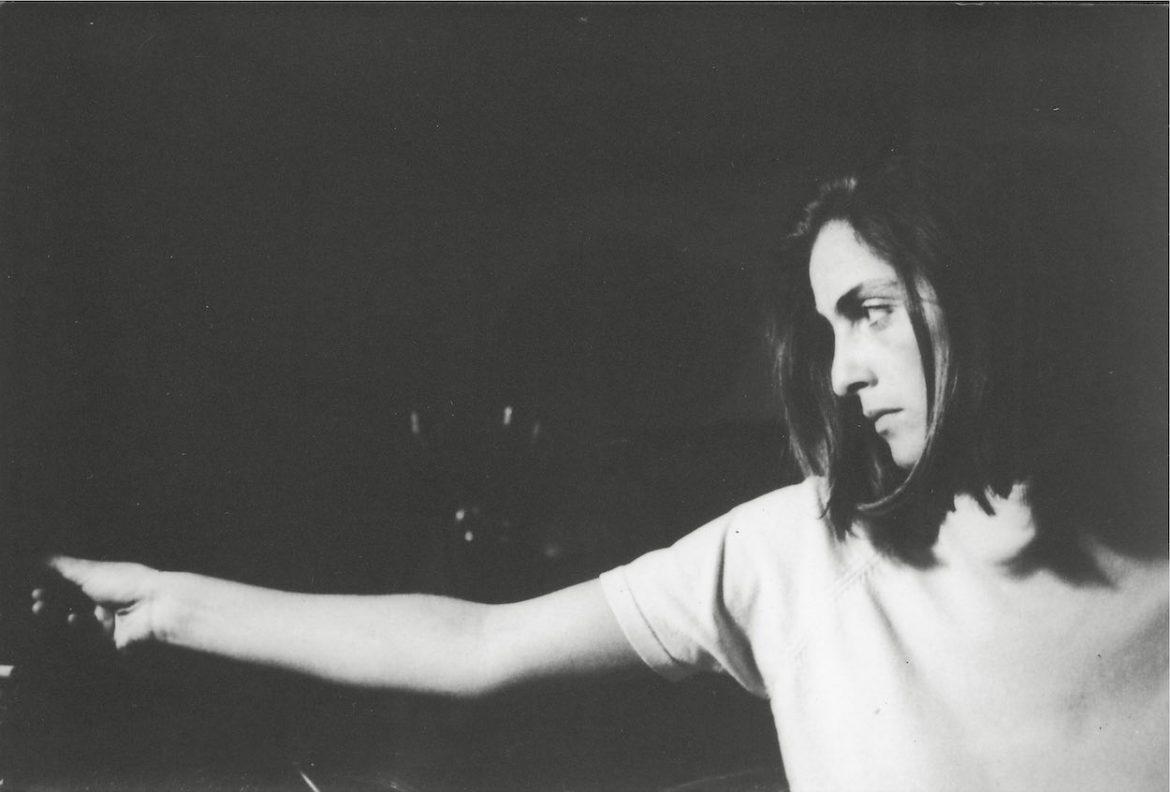
Pierre Schaeffer was a proponent of a concept he called reduced hearing, which Beatriz Ferreyra described to the Computer Music Journal as, “a sort of acrobatic exercise that pushed the composer to hear the sound without examining the cause of its production, to hear the sound out of its context.” Doing this allowed Ferreyra and others to twist sounds around in their minds in new ways, removing them from preconceived notions of their source and repurposing them into something brand new. With reduced hearing, it almost seems like a sound is stripped of its semiotic connotations and allowed to exist outside any symbolism so that it can be transformed. As Ferreyra stated succinctly to Foxy Digitalis, “You must hear the sound not from where it comes.” Emerging out of Schaeffer’s mentorship, Ferreyra developed her own compositional process and philosophy. Reflective of her aversion to Stockhausen’s rules, Ferreyra balked at compositional rules in her own work, while also acknowledging the very human tendency to fall into them, describing her penchant to slip into musical rules as “a nervous twitch.” She said to the Computer Music Journal, “I think that all rules search for a system, and every system has a tendency to fix its materials, so it stifles the freedom to create something new. Rules are predicated on known phenomena that are a part of the past. To create new structures, forms, music, it is essential to be free from rules.”
Ferreyra frequently speaks about how music is structured and how it moves through space, likely a reflection of her childhood where she physically moved throughout a space that had music moving along with her from room to room. The source material she draws upon for her music consequently is her environment and her voice, preferring natural sounds over purely electronic ones. She also appreciates how timeless these acoustic sounds are, telling Electronic Sound how they have, “nothing to do with the latest machine that everyone uses.”She recalled a story in the same interview of how she originally set up a microphone in a particular twelve-floor stairwell in Paris to capture her reverb, planting the microphone in a cage below the elevator, and she has returned time and again to use this same spot for reverb. Tying into her preference for natural sounds, Ferreyra also developed her own philosophy surrounding the use of silence within her works, likening the use of silence in music as analogous to how a person breathes while speaking. She stated to Perfect Sound Forever, “When we talk, we breathe. Music also needs breathing. This breathing can be a sound like a connection, a joint between two sounds or moments, or as an inspiration, a silence, before continuing the discourse, whether it is with speech or music.”
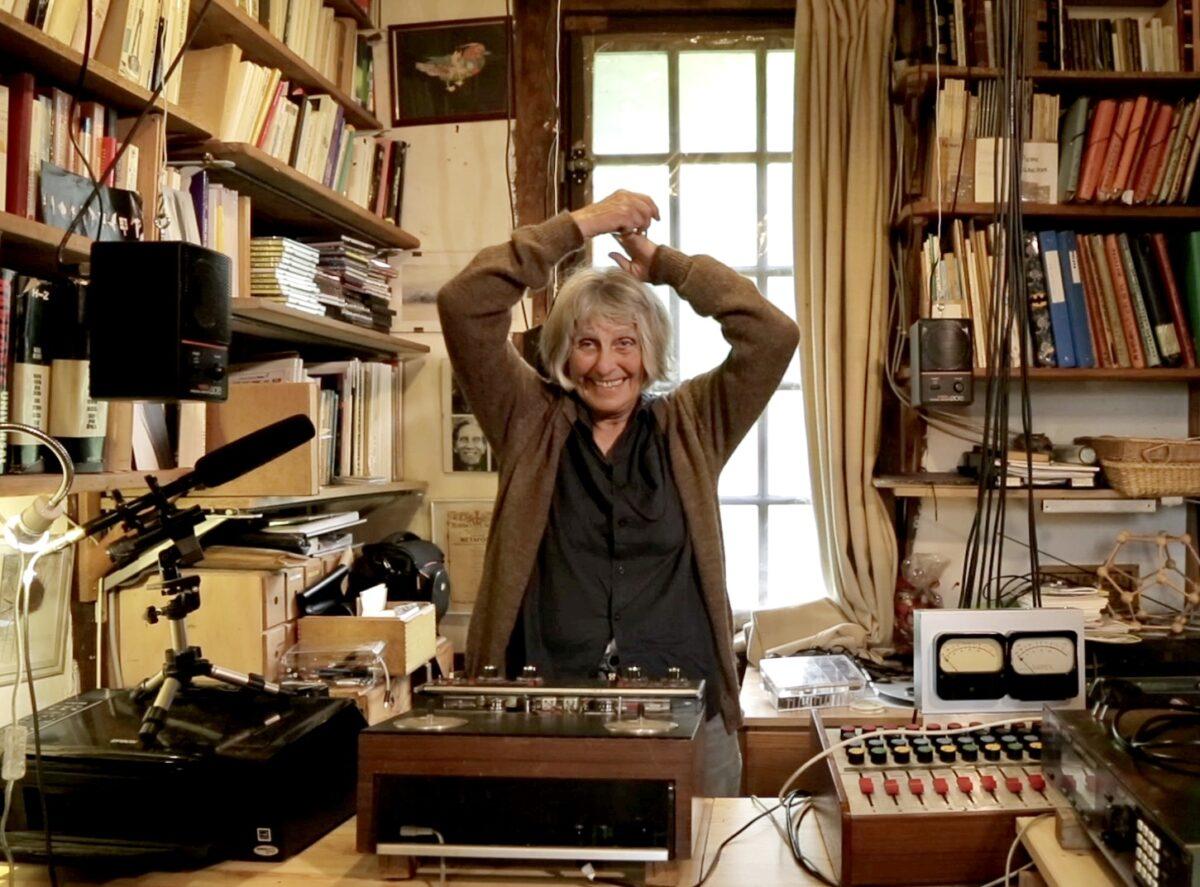
While a significant portion of Beatriz Ferreyra’s musical career relied on tape manipulation, she bought a computer in 1997 to supplement her analog process. Her approaches to composing on the computer are still greatly informed by how she worked with mono tape recorders, which she has described on numerous occasions as a very tactile procedure. Nowadays, she equally bemoans and appreciates the visual components of seeing sound on a computer. With tape, she would physically manipulate the tape, playing it “like a musical instrument,” in a way similar to record scratching, and tape necessitated that she listen with incredible focus, as there was no way to see the sound visualized like on a computer. When teaching composition students, Ferreyra often spins the composers around in their desk chairs 180 degrees so that they have to listen to their compositions instead of simply looking at the sound waves. Overall, Ferreyra has come to embrace the old and the new in her studio, which has a computer in the middle, a mixer to one side, and three Revox tape machines to the other. The whole room is surrounded by eight speakers, a similar setup to how she performs her works to a live audience. Ferreyra’s process has not rejected technological progress, but has appropriately incorporated computers as a tool for her musical philosophy, and not a substitute. And her interview with Computer Music Journal in 2001 may have predicted the music industry’s increasing over-reliance on burgeoning technology, warning, “If people continue composing music that machines make, I don’t think we will go very far. I think it’s better not to write music that just attempts to show off the technology.”
Beatriz Ferreyra not only composes music of sonic interest, with works like her new A Distracted God chirping and burbling as if the sounds are living and breathing, she incorporates entirely novel ways of hearing, performing, and thinking into her music. Every sound source has the potential to be transformed. Each piece of tape isn’t simply recorded sound, but is an instrument. Every rule is able to be broken and cast aside. It is her drive to change more than simply the possibilities of sound, but also to reshape the image of the compositional process, that has made her music stand out. What sets a human artist apart from the machinations of something like artificial intelligence are these ideas and emotions, reasons behind every note and sound wave that are beyond the algorithmic. Composers and songwriters of every genre should develop a rich philosophy like Ferreyra’s, because doing so transforms them as an artist and a person, and creates music that is truly innovative and unique. And as Ferreyra told Electronic Sound, these metamorphoses will carry an artist through their entire life. She said six years ago, “When you begin to compose, you are one person. When you are 83 years old, you are another person. You’ve had a life. I’ve forgotten lots, but I’ve learned an enormous amount, little by little.”
– Hannah Blanchette
June 25, 2026 | Blog