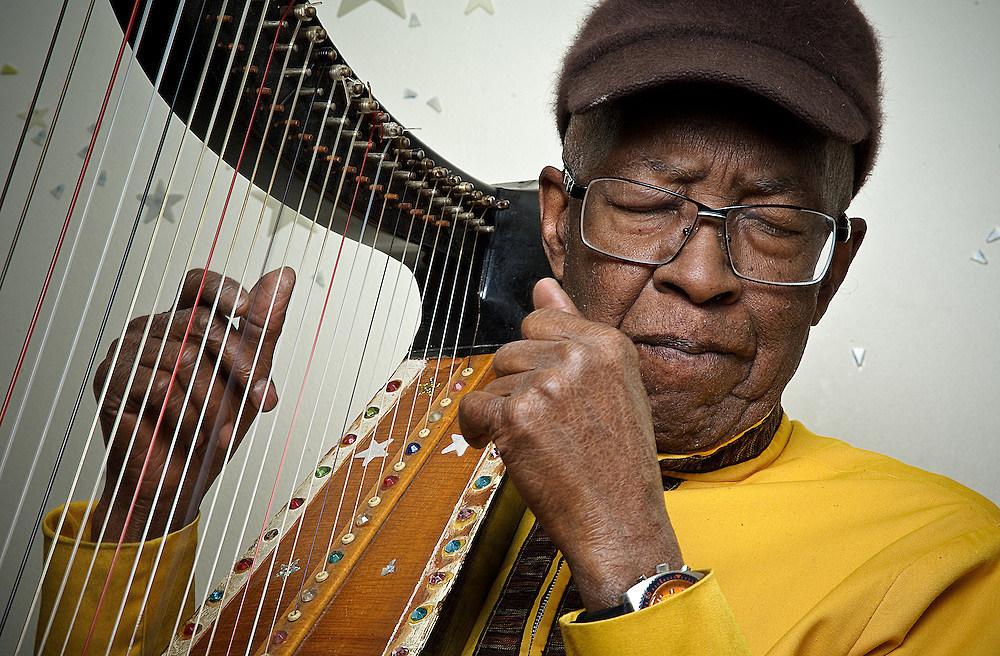
Connected to the Cosmos: Kelan Phil Cohran, ‘African Skies’, and Community Building in Chicago
I am a staunch adherent to the Baader-Meinhof phenomenon — when I notice something in my daily life more than once and in a quick succession, it’s a sign that I should dive into that subject further. This mindset is what led me to this post on Chicago’s Kelan Phil Cohran, who was an immeasurably influential figure in Black artistic culture in the city and beyond. First, I had come across Pitchfork’s review of Cohran’s African Skies, recently reissued on the new Listening Position imprint for Stones Throw Records. The review’s tantalizing descriptions of spiritual jazz and planetariums made me bookmark the record for later listening. But then, I stumbled across a CD of the album while out record shopping only a day or two later. That was enough of a sign for me to delve deeper into the life and musical outpourings of Kelan Phil Cohran.
Cohran was born in 1927 in Oxford, Mississippi, although much of his childhood was spent in St. Louis, Missouri. His musical career began in St. Louis as well, when Cohran formed his first group, a twelve-piece big band called the Rajahs of Swing. The influence of these big musical groups would follow him throughout his life, as time and again Cohran would form large ensembles, enlisting many musicians for his eclectic instrumentations. In 1953, Cohran began his lifelong journey in Chicago when he moved to the city from St. Louis. Within a few years, he joined Sun Ra’s Arkestra in 1959 and contributed trumpet and cornet in the ensemble until 1961 when the group moved to New York. Cohran decided to stay in Chicago upon this move, and he began to develop his own artistic ventures, all of which worked to celebrate Black culture and experiment with the fringes of musical philosophy and performance. In 1965, Cohran helped found the Association for the Advancement of Creative Musicians (AACM), an esteemed organization dedicated to the innovation of jazz and to providing opportunities for performers and composers. The AACM remains an active organization, continuing the legacy of one of the most significant organizations in the history of jazz and experimental music. However, Cohran disagreed with how the AACM veered too far from tradition, and sought out forming groups that carried out his own musical ideas.
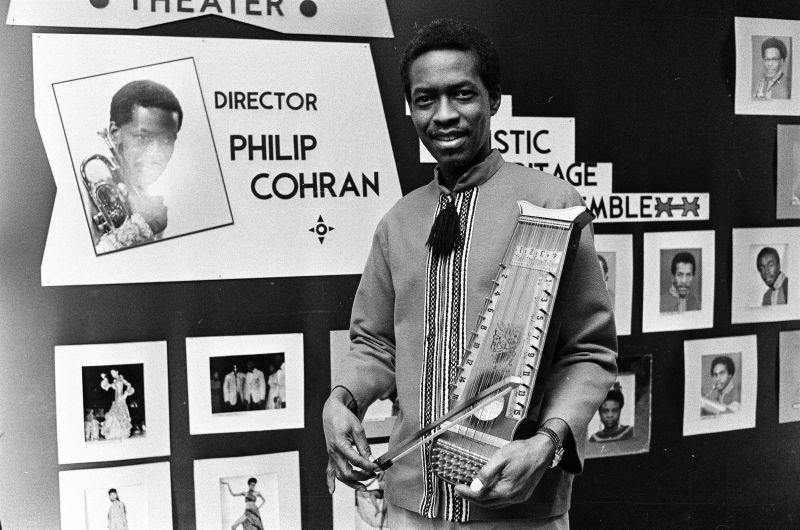
Cohran established more organizations in 1967 that carried out his visions. All in 1967, Cohran started the Artistic Heritage Ensemble, the Affro-Arts Theater, and Zulu Records. Each of these creations worked in tandem with one another to provide spaces for Black music, art, dance, and philosophy. The Affro-Arts Theater hosted events ranging from concerts to music and dance classes, and provided a stage for the Artistic Heritage Ensemble, which Cohran described as, “a model of dedication, social relevance, musical perfection, originality, traditional concepts and most of all, Blackness. This was a Black group that played Black cultured music for Black people.” The ensemble manifested from many of the musical styles Cohran had already been engaged with throughout his career — experimental jazz, funk, and big-band. His record label, Zulu Records, began putting out recordings in 1967 and released the Artistic Heritage Ensemble’s oft-considered most significant album, Malcolm X Memorial (A Tribute In Music) in 1968, which had been recorded live at the Affro-Arts Theater. Malcolm X Memorial stands as a testament to how the ensemble, theater, and record label were all interconnected, forming a self-sustaining ecosystem of Black arts.
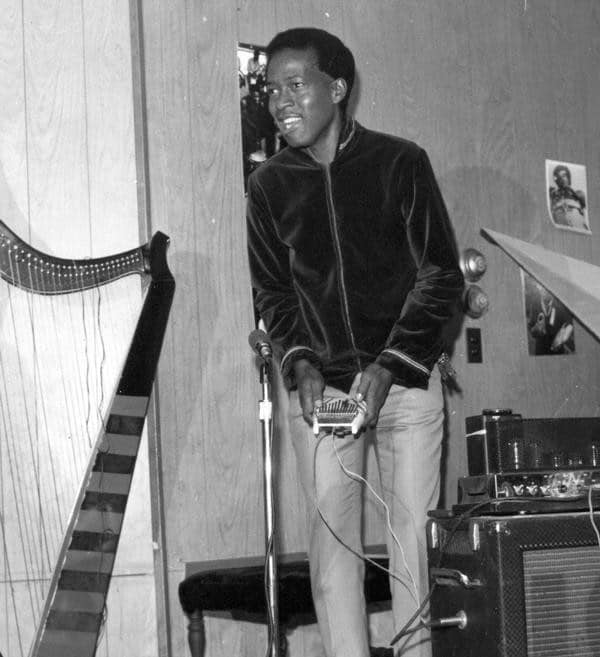
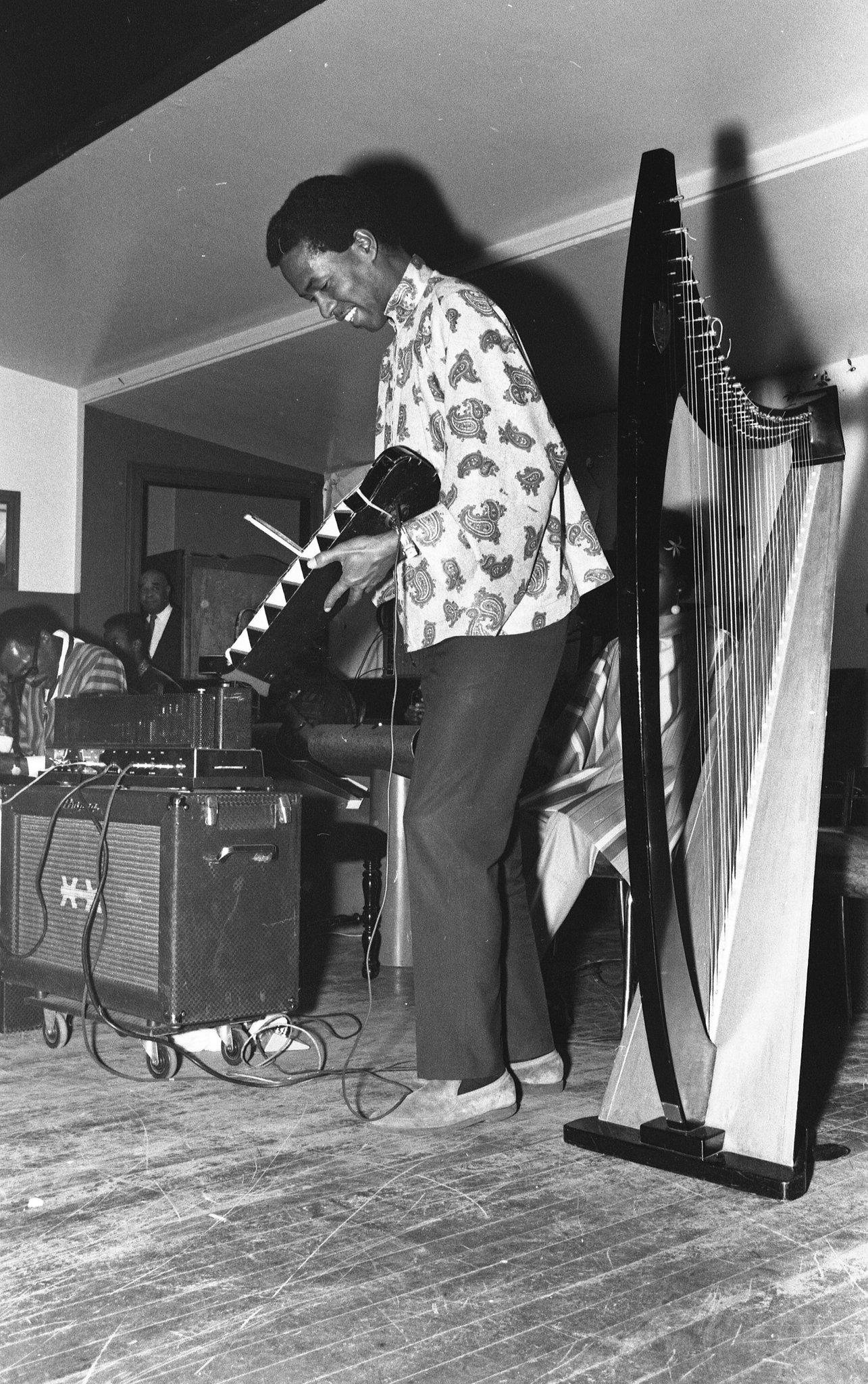
Cohran’s many endeavors across music and dance didn’t simply live inside the Affro-Arts Theater, but also expanded out into the community of the South Side with the immensely popular 63rd Street Beach concert series called On the Beach. Held at a refurbished beach house along Lake Shore Drive, On the Beach would have not only music, but also food, dancing, poets, artists, and classes in music and Black history. Cohran described how, “…It was the Artistic Heritage Ensemble, and everywhere we played, people danced. They couldn’t help it. The music isn’t new anymore, so it’s hard to judge the power that it generated, in this age, after listening to so many copies.” The producer Pemon Rami shared with the Chicago Defender that, “On the Beach was one of the first periods where the African American culture of the community of Chicago was able to gather and be inspired, not only by music but by food and by clothing and just by being able to be around each other in a way that we were expressing our love for ourselves.” Cohran’s celebration of Black culture with On the Beach not only brought the arts out into the community in an accessible way, but they also highlighted how interdisciplinary art can be, how music, visual art, writing, dance, and history interact with and support one another.
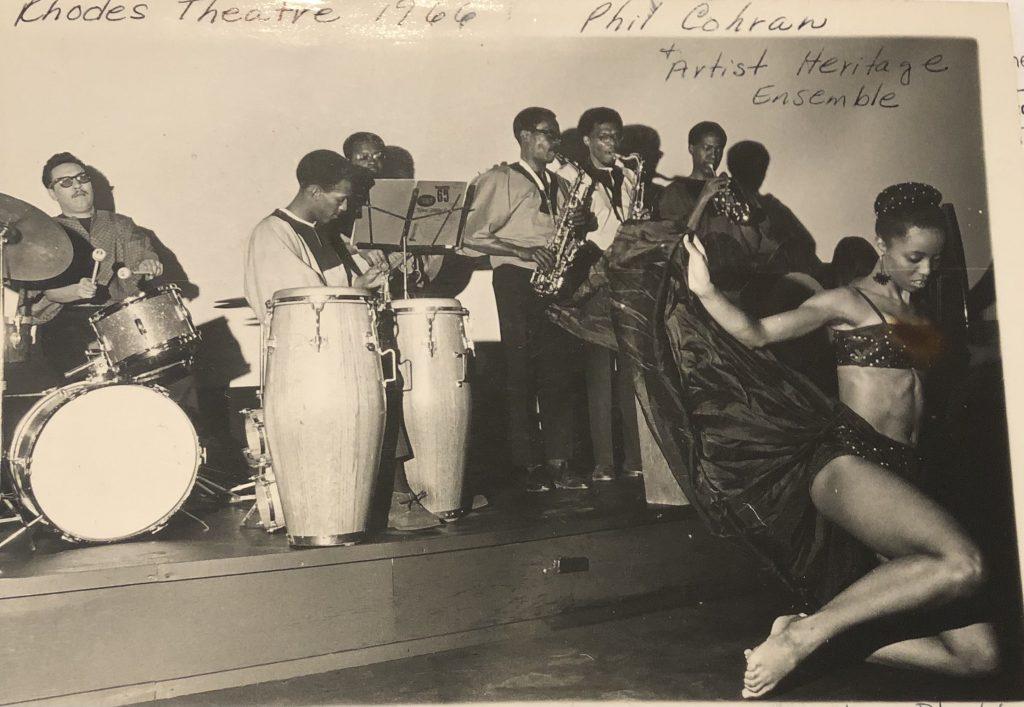
The interdisciplinary nature of On the Beach and all of Cohran’s ventures were likely a reflection of his own varied and insatiable interests, in which he taught himself musicology, astrology, world history, and the health sciences. His time with Sun Ra ignited an interest in astronomy, and he stated in an interview with the Great Black Music Project that, “Sun Ra forced us to expand our thinking and our whole basis for playing music. He forced us to think of ourselves as living in the cosmos rather than living on planet earth.” Sun Ra encouraged Cohran to visit the Adler Planetarium, which sowed the seeds for an opportunity that would emerge decades after Cohran played the trumpet in the Arkestra.
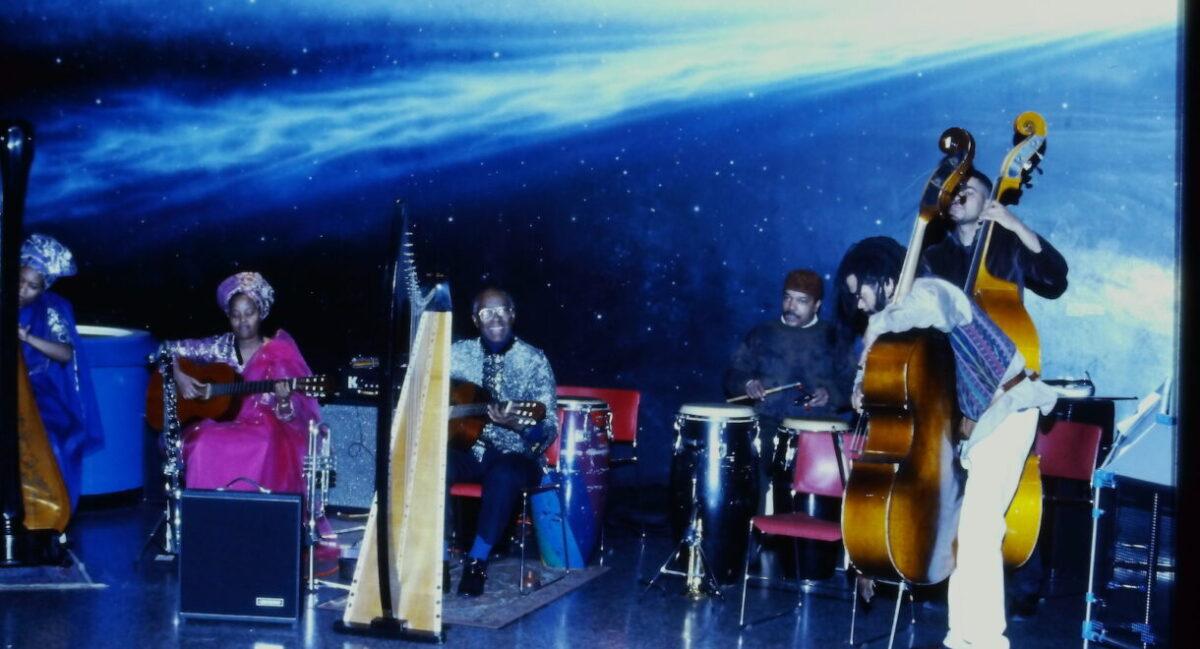
In 1993, the Adler Planetarium commissioned Cohran to compose African Skies to accompany astronomical footage sourced from various African observatories. Cohran appropriately dedicated this work to Sun Ra, an eclectic jazz odyssey written for voice, cornet, violin, two harps, two basses, and Cohran’s own invention, the Frankiphone, an electric instrument derived from the kalimba. His musical influences seep through every inch of African Skies,at times the ethereal harps, violin, or voice floating along an astral spiritual jazz atmosphere (“White Nile,” “Sahara”), or at others paying tribute to Cohran’s big-band days (“Cohran Blues”). Many of the pieces are driven by insistent, minimal motifs in one of the instrument groups, often the basses and the Frankiphone, giving the album this unstoppable electricity (“The Dogon,” “Kilimanjaro”). Where the 63rd Street Beach concerts were a fusion of each of Cohran’s artistic endeavors, African Skies feels like some sort of pinnacle, a moment where he could quite literally connect his music and his self to the cosmos.
But of course even before African Skies, Cohran was connected to the cosmos as Sun Ra taught him. He recalled one of his experiences at the 63rd Street Beach in an interview with Never the Same, saying, “One day we had a giant rainbow come out of the sky while we were performing. It was absolutely beautiful. Well, we were being blessed from the cosmos.” I’ve been making some trips to Chicago to visit the shop, and I was in the city while working on this piece. One day, I went to the lake for the first time, up at Montrose Beach. I had never visited a Great Lake before, and was completely overcome by the majesty of what lay before me. The giant ice formations rose formidably up from the surface, the waters kept peacefully at bay. The crystal-clear sky and pristine water merged along the horizon in a surreal haze, making it hard to discern where water ended and sky began. I spent hours walking along the shore and trails, connecting with the shoreline like I had numerous times throughout my childhood on the East Coast. I felt completely in the moment and grounded in that natural realm, but also connected to the past and maybe even the future.


Once I returned and read more about Cohran’s philosophy and his experiences on the beach, I realized I caught a glimpse of how Cohran could feel “blessed from the cosmos” in a place like that. But with Cohran, it wasn’t just the grandeur of nature, although that can be a significant part of living within the cosmos. Cohran’s life and career birthed a Black arts movement that was so integral to place and community, reflective of Chicago and especially the South Side, and had the power to connect place directly to the arts and manifest a space where Black arts and culture could thrive, and continue to have an impact to this day. Definitely “blessed by the cosmos.”
– Hannah Blanchette
February 24, 2026 | Blog