The Cathedral Paradox: JJJJJerome Ellis and Sarah Davachi at Talk Low Festival 2025 in Cincinnati, Ohio
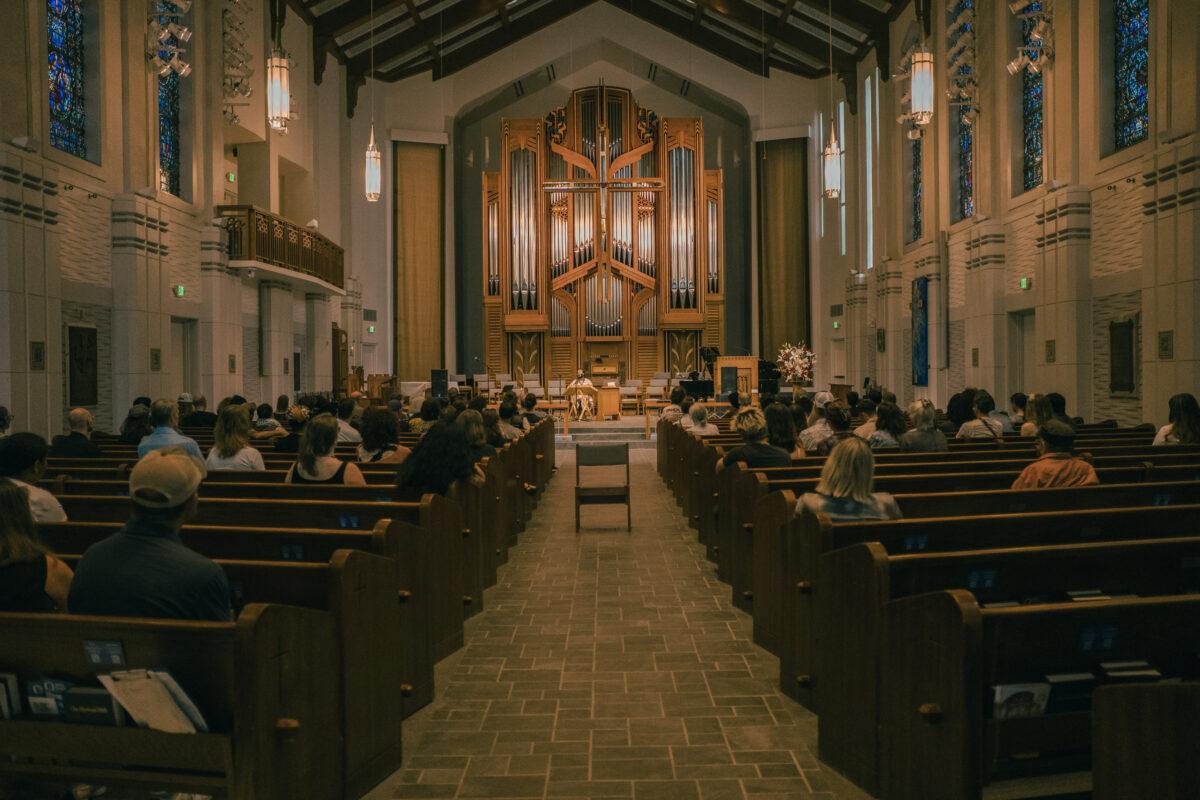
Last time on the blog, I wrote about my experience hearing Chris Corsano at Cincinnati’s Talk Low Festival, the second annual experimental music festival in the city featuring local and visiting performers. After Corsano’s set at Homemaker’s Bar, a quick streetcar ride brought me to Christ Church Cathedral for performances by multi-instrumentalist JJJJJerome Ellis and organist Sarah Davachi. Cathedrals are multi-faceted spaces, as they are paradoxically grandiose and intimate at the same time. Ellis and Davachi interacted with the cathedral’s space with entirely different approaches, drawing attention to the various ways one can view the interior of a cathedral and how sound can move about the space.
As I settled into my pew at the cathedral, I traded my bar counter writing surface for a Hymnal 1982 of the Episcopal Church, the intimacy of Homemakers contrasted by the expanse of the cathedral. Each little step echoed, every pew creak cut through the silence. JJJJJerome Ellis made me even more cognizant of my surroundings as they began their set by verbally observing the details around them — the stained glass at the heights of the space, their own dress and the feel of the material. Each observation helped me feel more grounded in the space, and it felt like this practice of Ellis’ prepared us to remain aware of space as Ellis utilized every inch of it throughout their set.
Ellis began by circulating air through their tenor saxophone, as if breathing life into the upcoming performance. In the silence of Christ Church Cathedral, you can hear air moving as much as anything else, and I don’t believe Ellis shied away from these oft-considered “extraneous” sounds. All of it matters to their art. Ellis then began to intone with their voice, their melody reverberating in the space as they stood up at the altar. When they began their saxophone melody, the lines took on a spiritual jazz quality, chant channeled through a saxophone with a velvety, warm tone that swirled around the room, cresting along peaks before dipping into valleys. Between these saxophone passages, Ellis wasn’t afraid of the silences, making me acutely aware of my own sounds. In my notepad, my handwriting took on a more gray quality, reflecting how I tried to dampen the sound of my pencil scratching against paper. In the silence, the half-hour toll from the cathedral’s bell tower marked time for the first of many occurrences throughout the event, consistently intervening into the ambience as a reminder of time moving forward even when music makes it feel weightless.
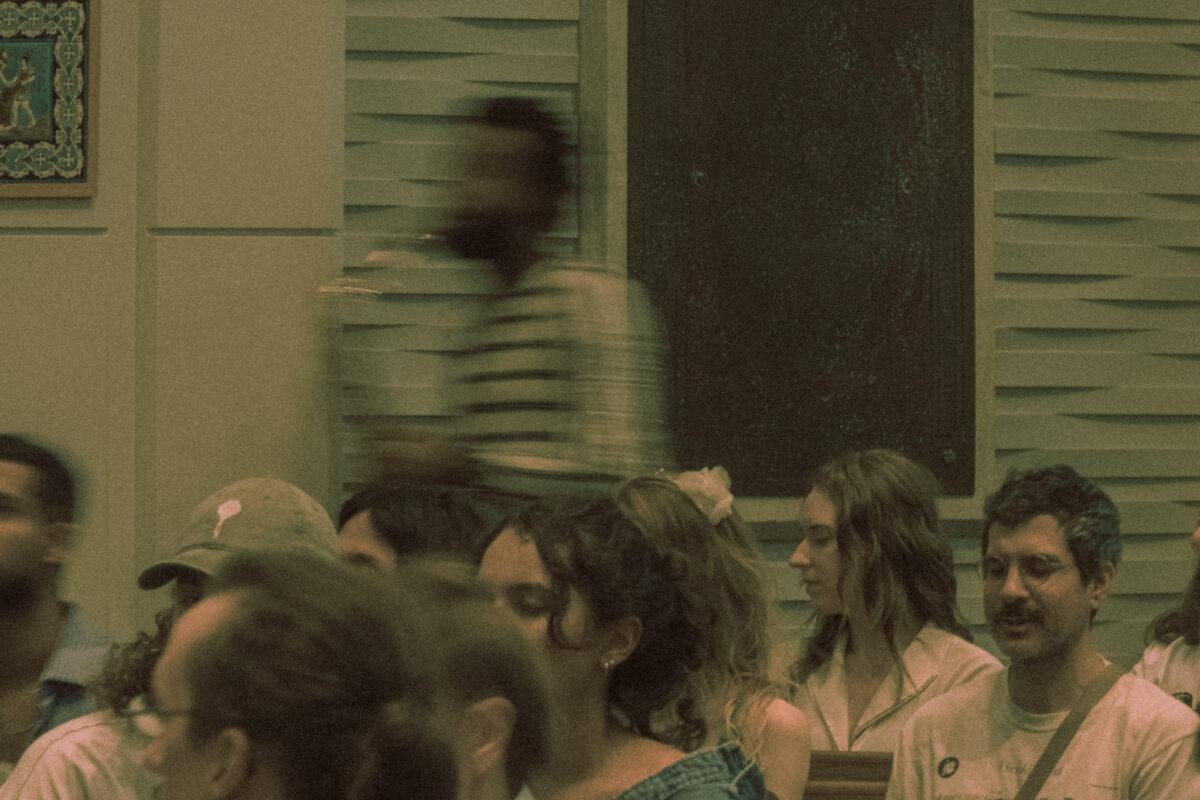
At this point, as if triggered by the bell, Ellis started to walk down the aisle between the pews, entering into the mass of people. Like during Corsano’s set, I had my head down to jot something in my notepad, and when I looked back up Ellis was right there. I hadn’t even noticed the sound moving closer towards me. This moment made me reflect on the capricious nature of experimental music, especially for the listener. If you look down for one second, everything changes. This unpredictability is part of the thrill in experiencing experimental music live. As Ellis circled the room, I tasked myself with staring straight ahead instead of following their path with my eyes, allowing the tones of their saxophone to pan around me, this phenomenon of “disembodied” sound attached to a moving body. Even as Ellis’ outbursts of saxophone lines became more intense, they still embraced the silence in between, their gestures like punctuations in the air.
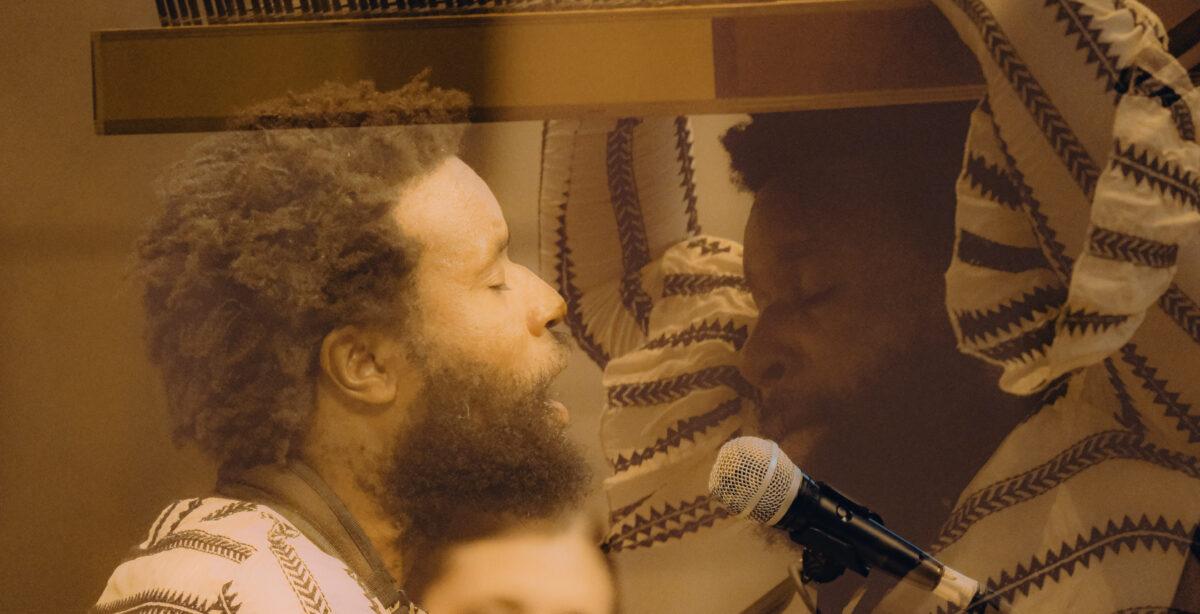
Once Ellis returned to the altar of the sanctuary, I was thrilled to realize that an item I thought was a podium was actually a large hammered dulcimer. The saxophone set aside, Ellis began to perform on the dulcimer, providing delicate swaths of chords to sing over. But they began to increase the speed, hammering faster until the dulcimer produced a wash of ethereal, cosmic sound. Then, literally like clockwork, the bell tower struck quarter til and Ellis immediately strode with the dulcimer and a chair to the center of the room right next to my pew. Once settled again, now at the crux of the space, Ellis resumed playing, the music more active than before, the hammers bouncing from harmony to harmony like droplets on a pond. Dying down, Ellis caressed the strings with the wooden part of the hammer and their hand, a gentle, loving gesture. Ellis then carried the dulcimer perched on their head further down the aisle, as if it were a sacrifice. They knocked on its body softly, punctuating the silences once more with the wooden echoes and wisps of overtones from the strings.
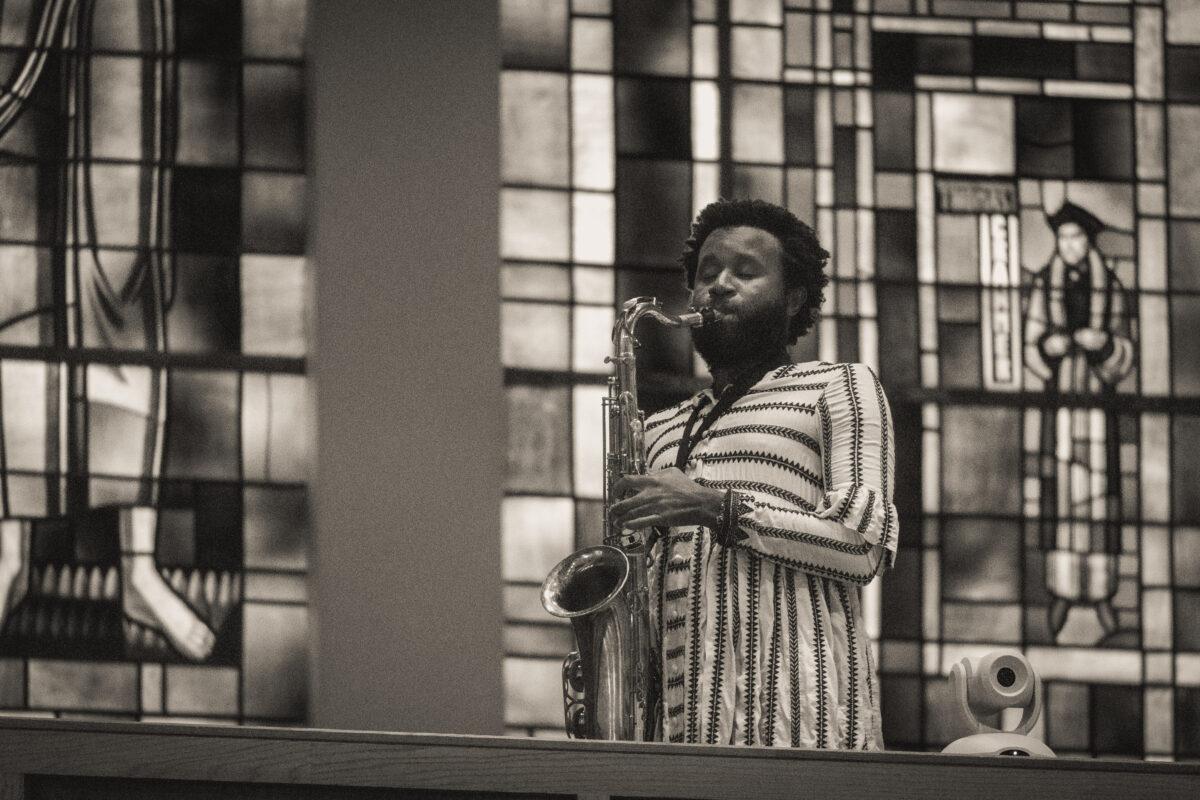
Ellis’ journey around the sanctuary brought them back to the altar again, completing a cycle once more, the actions now coming across as ritual. They sat at the piano, playing a plaintive, somber melody and returning to the intonation sung at the beginning of the performance. I closed my eyes and upon opening them, fellow Talk Low performer Molly Joyce had taken Ellis’ place at the piano and Ellis had come full circle to the saxophone, wailing at a feverish height unprecedented in the set. These heights were mirrored in Ellis’ movement, as they ascended to the choir loft in the back of the sanctuary, framed by stained glass, illuminated by the golden hour.
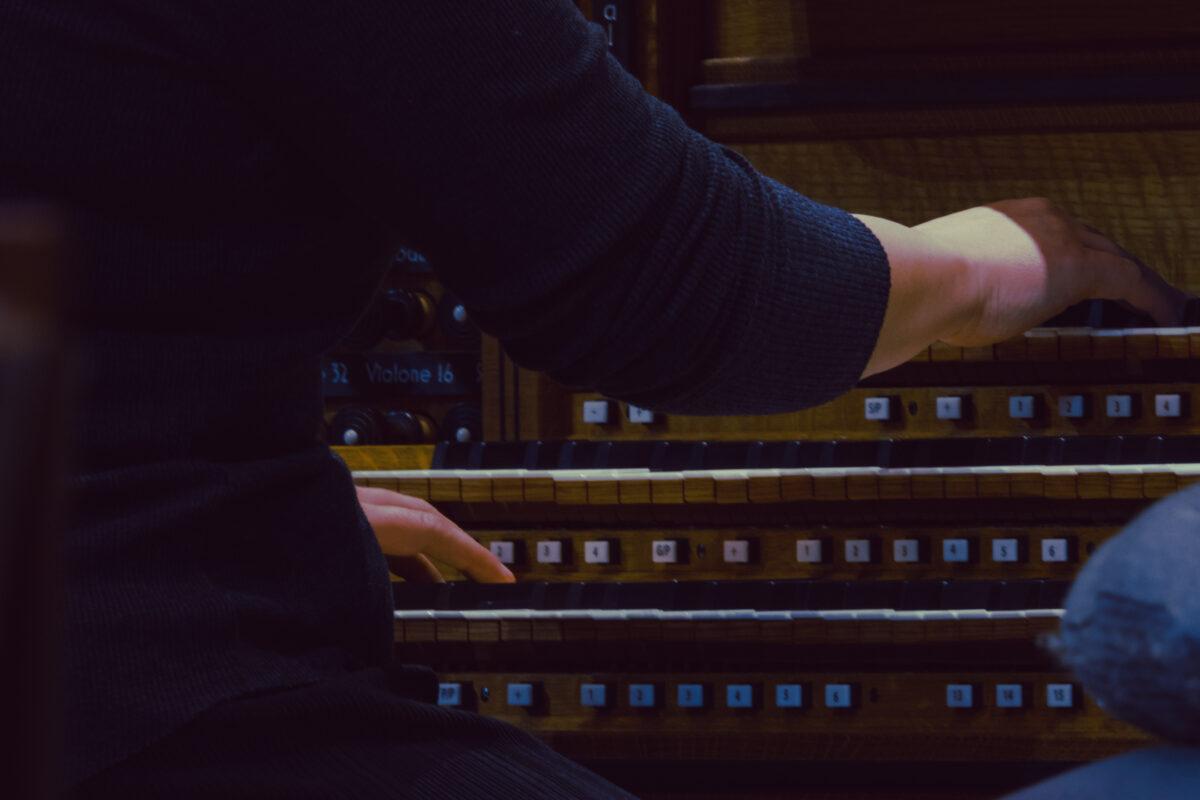
While Ellis embraced the silence of the cathedral and how a single sound could drift throughout the open acoustics, nestling into every nook and cranny of the room, organist Sarah Davachi approached her performance in the opposite way. With the start of a single, droning note, silence did not return for the next hour. Davachi used her time in the cathedral to explore how she could fill the space, layering notes and overtones until pitches felt like they would burst through the walls. In the overarching pattern of intervals and chords, there were paths of tension and release, but her deliberate movement through those chords allowed me to find peace in each one. I could settle into each to the point that even dissonant clusters of pitches seemed like pure intervals. Overtones floated above Davachi’s drones and sometimes it felt like they would disappear and then reemerge like mystical phantoms. Meanwhile, the lower pipes of the organ pulsed and oscillated, causing the drone to ripple in these otherworldly waves. With Davachi all the way up at the altar, the drone felt disembodied at times, and once again Davachi contrasted Ellis’ performance. Davachi remained fixed with a sound engulfing the entire room, whereas Ellis brought individual sounds throughout the space through movement.
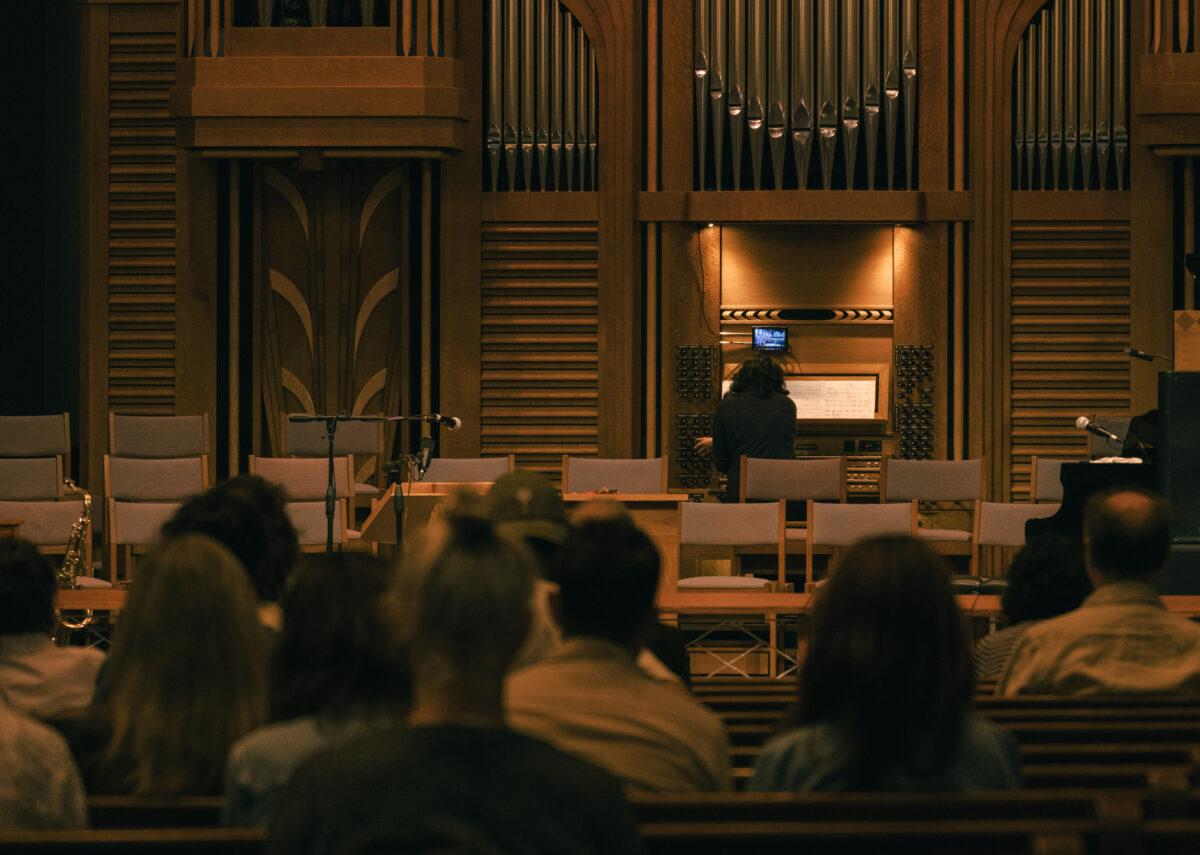
The half hour bell tolled and intertwined with Davachi, jubilant against the solemn drone. After about twenty minutes of primarily pure intervals and single tones, Davachi arrived at her first minor chord, and the revelation of a full chord at this point was utterly sublime and heart-wrenching. Now gradually building the texture and volume, she added a higher motif into the progression that was so delicate and tragic. But just as the crescendo began, Davachi began to peel back the layers of notes, making me realize I’d forgotten just how many pitches and overtones were hidden in there.
The tempo of the piece began to accelerate, although the pace was still deliberate and with a full embrace of each chord. I was completely enraptured by Davachi’s drone at this point, enveloped in sound now for forty-five minutes. A phrase entered my head and began to cycle over and over like a mantra, “religion of sound, sound of religion.” I still don’t entirely know what that means, but it felt like this ecstatic manifestation of giving myself over to the deeply focused listening I was experiencing. I started to wonder what silence would sound like after forty-five minutes of continuous musical sound. I’d never before encountered sound and silence so starkly juxtaposed with one another.
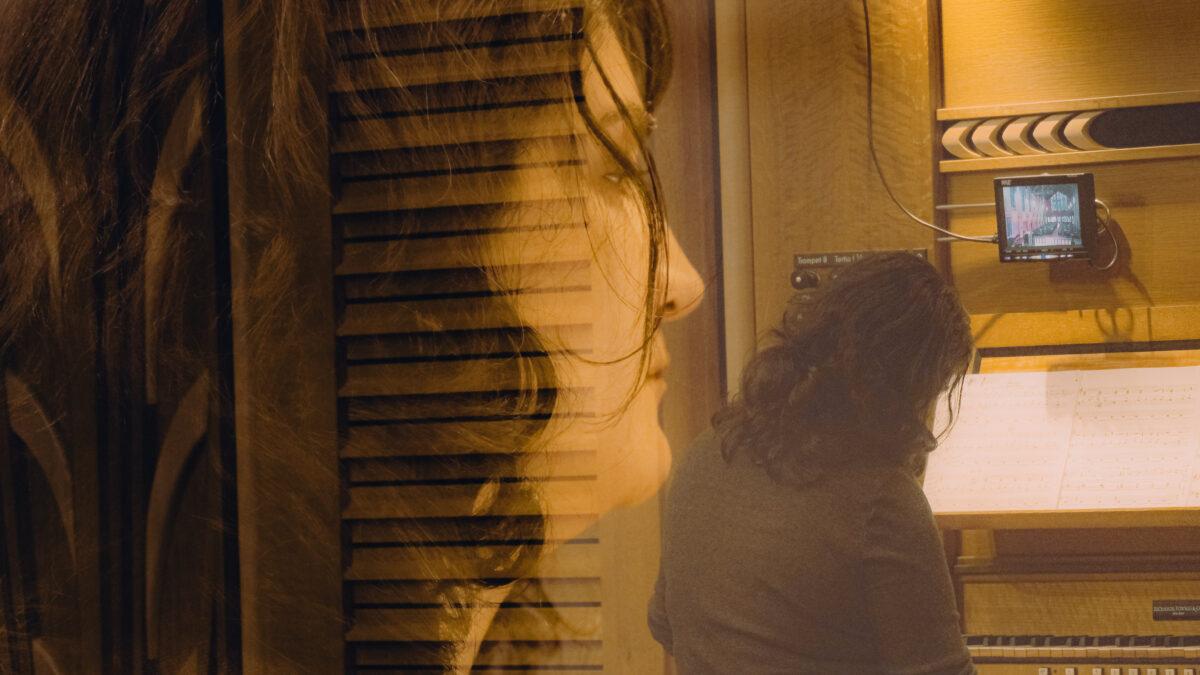
With a low drone that nearly rattled the cathedral, I knew Davachi’s performance was climbing towards some kind of apex. She changed the organ stops to a harsher timbre that actually scared me, and now the giant chasm that Davachi formed with the organ’s mammoth size was like the entrance to a black hole, the overwhelming collection of pitches swallowing me. Davachi landed on her final note, a pitch I thought would resolve to a different note, but she held it just long enough that it reached resolution on its own. Once she released the note, my curiosity about silence in the aftermath of her continuous, hour-long performance was satiated. It wasn’t really silence, but whatever it was wavered low in my ears, like nothing I had ever felt before. The remaining overtones pulsed as the organ pipes had, the ghosts of a performance now over.
– Hannah Blanchette
All photos by Renoxal Visuals
October 22, 2025 | Blog