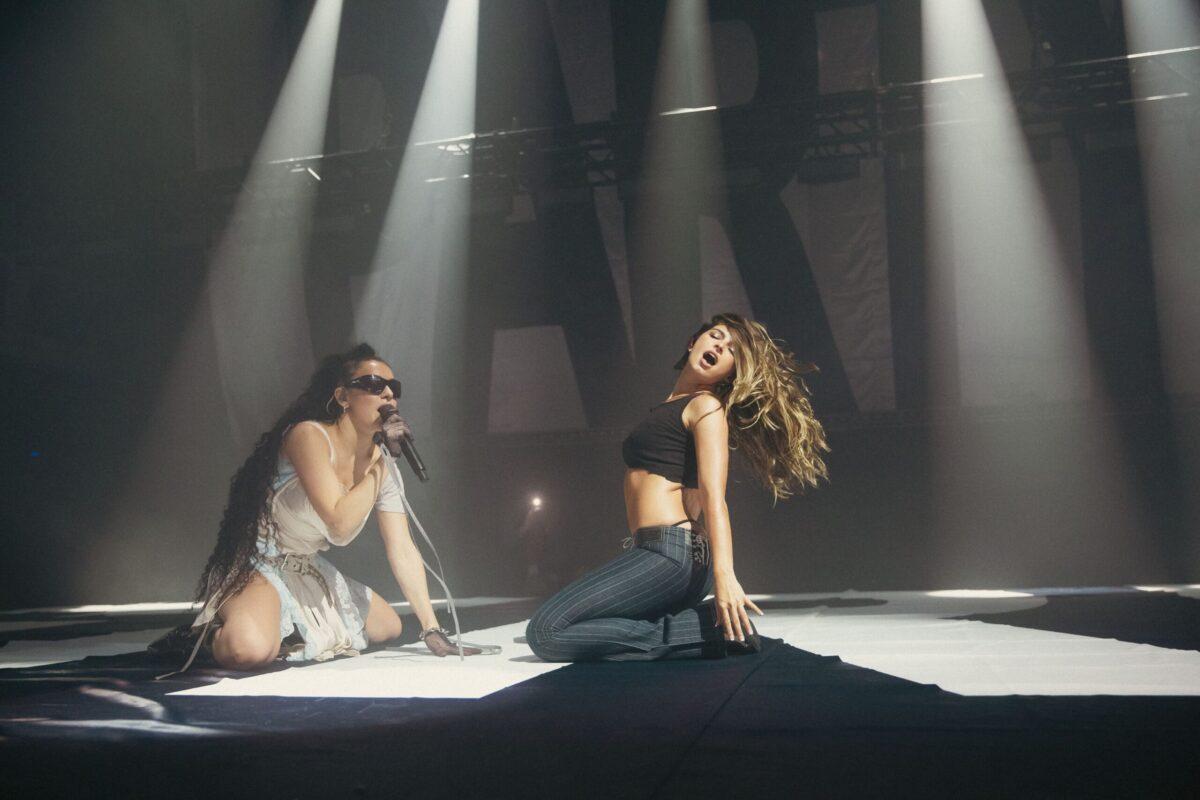
Social Media vs. Authenticity, Pop vs. the Underground, and Addison Rae vs. It All
I don’t typically talk about pop music here on the blog, but I cannot deny what I have been preoccupied with these past couple of weeks. While I do proclaim myself a digitally minimal person, one of my indulgences is a midnight YouTube scroll. During one of these scrolls, the algorithm presented me with the freshly premiered music video for Addison Rae’s “Fame is a Gun,” the final single before the release of her debut studio album on June 6th. Even though I deleted my TikTok about 2-3 years ago, I still vaguely knew who Addison Rae was — I think even some of the most offline people can’t escape the big TikToker names. Her name also rang a bell for me because she was featured on the first Charli XCX BRAT remix, “von dutch.” I remember doing a double take when I initially saw the single dropped: what was “cult classic” Charli XCX doing collaborating with a TikToker? With only these basic facts in the back of my mind, as well as my preconceived notions of what “TikToker pop” might be like, I felt compelled to press play on the “Fame is a Gun” music video. I was shocked to find that I enjoyed it, even if it was the result of after-hours, YouTube-scroll sleep deprivation.
I’ve loved pop music from childhood to the present, spanning the chameleonic pop of Madonna, the new wave sheen of certain Blondie hits, Kate Bush’s bizarre pop experiments, Lana Del Rey’s sultry, cinematic ballads, and of course Charli XCX’s off-kilter throwbacks to the 00s rave dance floor. So my enjoyment of Addison Rae’s single didn’t completely come out of left field. But, I have found myself increasingly bored with more mainstream pop music in recent years as its trended towards propelling milquetoast songs fit for a vibe more than creativity, indicative of Spotify’s homogenizing effect on the music industry that Liz Pelly dissects in her book (and which I discussed a few weeks ago). While “Fame is a Gun” isn’t the most groundbreaking pop single of all time, I can appreciate how it is a tautly written pop song, a fairly minimal piece of slightly sinister bubblegum that creates subtle variety in exactly the right moments to make it catchy without being monotonous. The music video, directed by cinematographer Sean Price Williams, bursts with bold colors and jumps around surreal imagery that drew comparisons from viewers to Gregg Araki and David Lynch. In the aftermath of my enjoyment, I was hit with a load of conflicting emotions. Should I indulge in pop produced by someone who has wholeheartedly welcomed, and even shaped, the social media system I am so opposed to?
In this post, I don’t necessarily want to debate whether Addison is a good or bad album, whether Addison Rae has rightfully earned an indie-appeal badge of honor, or whether Rae’s flirtations with the underground are genuine. More than anything, I want to unpack these questions in general, analyzing indie/underground anxieties surrounding a TikTok star transitioning into a pop music career that flirts with underground-sensible pop figures. In the days following my first listen to “Fame is a Gun,” my explorations uncovered a lot of fascinating language, discussions, and surprises surrounding Addison Rae, authenticity, social media, and what it means to be mainstream versus underground in a world where it all can be accessed via the same online channels. Are the lines between mainstream, indie, and underground getting blurrier because of social media and streaming? Is it all marketing? Are the discussions we’re having about authenticity the same ones that arise again and again when a new pop artist (especially female) debuts?
In an extensive interview for The New York Times’ Popcast hosted by Jon Caramanica and Joe Coscarelli, the question of Addison Rae’s more offbeat tastes and connections surfaced. Coscarelli cites Rae’s Boiler Room appearance, the “von dutch” remix with Charli XCX, and Arca’s remix of Rae’s own “Aquamarine,” as examples of her “tapping a little bit into the underground.” He intimates how these collaborations could be seen as surprising or even calculated, jovially remarking, “Are you hipster-baiting or are you not hipster-baiting?” Rae asserts that her tastes for more eccentric pop are authentic, but simply weren’t a part of herself she displayed while she gained her following on TikTok. This embrace seemingly goes in both directions, with Arca and Charli XCX inviting Rae to appear onstage with them on various occasions. This reinforcement from these beloved, cult favorite pop and electronic figures further cements this apparent symbiotic relationship between Rae and pop music that goes beyond the mainstream.
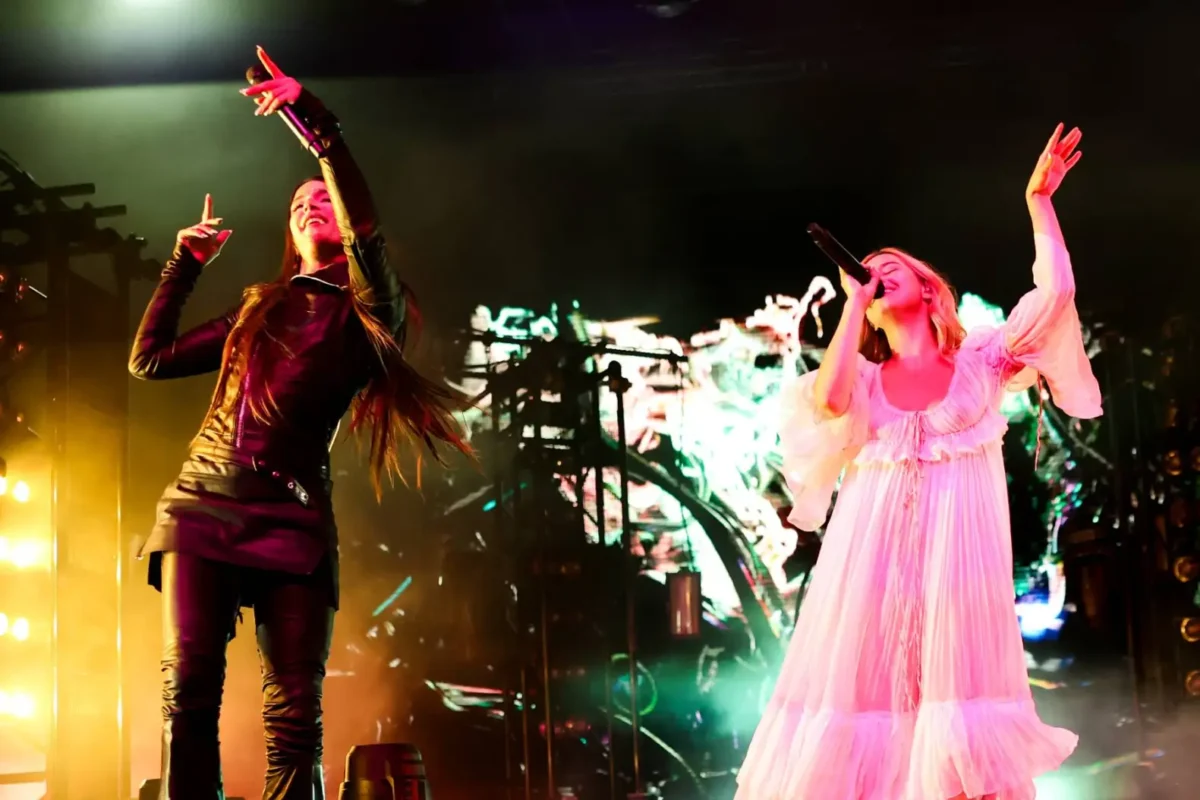
Coscarelli’s concept of “hipster-baiting” gets at the heart of the anxieties that indie and underground folks experience when confronted with the amalgamation of super-pop and underground-darling. In the current industry landscape, I believe there is a very real (and sometimes justified) fear of the mainstream encroaching on independent spaces and vice versa, as it has become all too easy in the digital realm. Pavement was just as able to go viral on TikTok as Addison Rae was, and that is the reality of how the long-defined boundaries of music categorization are blurring as they stream across the same sites and screens. What gets lost in that shuffle, however, is that these boundaries weren’t simply tags or vibes, but indicators of methods of production and ethos. Which isn’t to say that there isn’t value and a history to a pop star gaining indie or underground cache — Sonic Youth covered Madonna and Weyes Blood has sung with Lana Del Rey.
While reflecting on these reactions to Addison Rae’s sudden status as a TikToker turned pop star, I couldn’t help but notice the parallels to the initial skepticism and even vitriol surrounding Lana Del Rey’s rise to fame. In 2011, Del Rey catapulted to fame seemingly from out of nowhere via her viral music video titled “Video Games,” circulated through that time period’s increasingly popular hitmaker: YouTube. Critics and audiences alike questioned whether she was an industry plant and doubted her authenticity as a musician because she portrayed a character in her songs and image. Pitchfork slammed her debut, Born to Die, with a 5.5. There are many similar doubts surrounding Addison Rae’s transition into music, however she landed an 8.0 from Pitchfork for her debut, further solidifying these conflicting emotions radiating off of critics and audiences. Are we embracing Rae’s shift towards an indie-favorable pop career or do we still maintain a critical distance? Even reviewer Meaghan Garvey expresses a tentative apprehension of Rae’s vision. She cites Charli XCX’s statement to Rolling Stone that “Everything [Rae] does relates back to her art — every item of clothing she wears, everything she says in a red-carpet interview, everything she tweets — it all is a part of the world-building.” Garvey responds to this idea with, “Initially, I found the idea depressing: a teenage girl who’d changed her life performing to a phone camera, now optimizing her every move for the aesthetic. Then again, there’s something potent in Rae’s winking performance—a borderline unhinged devotion to the American promise that a person’s destiny is entirely in their hands.”
One more important angle that differentiates Addison Rae from other pop debuts, and from other occasions when the underground has embraced a pop artist, is that Rae was (and still is) a social media influencer. As influencers have been propelled via Instagram and TikTok to unprecedented realms of fame during the past decade, a concurrent skepticism of their online intentions has arisen in tandem. It always seems that no matter what an influencer posts on their accounts, the content is secondary to the intent to sell a product. This reputation still hangs heavy with Rae, and I find that it remains unclear whether Rae wishes to shed that time period of her life, or integrate it with her music career. It feels like Rae is the first example of her kind: a wildly famous TikTok influencer developing a music career that engages with and is fostered by those in more experimental pop spheres. I wonder how many more situations like hers will appear in the years to come as social media and music continue to intermingle. In many ways, Addison Rae is the quintessential pop star to emerge from the music industry we’ve forged — born of and bolstered by social media, super streamable while being favorable to the experimenters, drenched in the visual aspects of pop stardom, digestible yet controversial. Addison Rae was inevitable.
– Hannah Blanchette
June 16, 2025 | Blog