The Medium is Indifference: How Will We Navigate Musical Taste in a World with Artificial Intelligence?
A couple months ago, I was hanging out with a friend who shared with me an article by sound studies scholar Ryan Blakeley from the Musicology Now blog titled, “Welcome to the Sound Wellness Revolution”: Endel’s AI-Generated Soundscapes and the Commodification of Passive Listening.” My friend told me she didn’t realize that Endel wasn’t a real musical artist, but actually AI-generated, and that she “didn’t know how to feel” because she enjoyed the music, especially while studying. This statement immediately jumped out at me because it highlights an impending quandary: How are we supposed to feel if we enjoy something generated by artificial intelligence? Right now, much of the conversation surrounding generative AI and the music industry connects to what Blakeley refers to as functional music, music composed or consumed for a specific purpose such as relaxing, focusing, exercising, sleeping, etc. While some may say it doesn’t matter whether we enjoy functional music or not because it’s background music, we need to start asking ourselves these questions now. Artificial intelligence is inevitably going to become more finely tuned and more prevalent. What happens if AI begins generating compelling musical works that demand focus and presence of mind while listening? What if you like it? Could AI rewrite our preconceived notions of taste?
Blakeley’s article focuses on Endel, a German-based company that signed to Warner in 2019, later revealed to be not a musical artist, but AI-generated, endless soundscapes that contain the capacity to shift with the weather, time, and biometrics such as the listener’s heart rate. Endel produces solely functional music, a type of music that is not new, but burgeoning in popularity during the streaming era. Functional music dates back to Muzak, the company of background music founded in the 1930s that provided the inoffensive, unobtrusive soundtrack to shopping malls, offices, and of course, elevators. Whereas Muzak featured swooning light music orchestras dotted with chipper flutes and saccharine strings, today’s functional music in the vein of Endel favors ambient electronic and New Age inflected styles. Endel’s cooptation of “scientific evidence” to support their AI soundscapes as influential on one’s focus, mood, and self-care echoes similar studies performed by Muzak in the 1950s to promote workplace efficiency, known as Stimulus Progression. Throughout the article, Blakeley dives into the ethical dilemmas surrounding AI-generated functional music, as well as its interaction with the unseemlier aspects of the self-care and productivity industries. Blakeley summarizes best how AI artists such as Endel contribute to the increasing passivity of listening in this statement: “In an attention economy where businesses across entertainment industries vie for finite user attention, music’s ability to be listened to passively as a supplement to other activities makes it especially lucrative.”
Liz Pelly’s new book, Mood Machine: The Rise of Spotify and the Cost of the Perfect Playlist immerses itself deeply into the growth of functional music and the companies who mass produce it. While I’ve only been able to read the book excerpt published in Harper’s so far — optimistically I have been waiting in a huge hold list for it at the public library — I will return here with a full report on that book soon. In that Harper’s excerpt, Pelly writes, “A model in which the imperative is simply to keep listeners around, whether they’re paying attention or not, distorts our very understanding of musics’ purpose. This treatment of music as nothing but background sounds — as interchangeable tracks of generic, vibe-tagged playlist fodder — is at the heart of how music has been devalued in the streaming era.” She goes on to say later in that paragraph that, “It’s not hard to imagine a future in which the continued fraying of these connections erodes the role of the artist altogether, laying the groundwork for users to accept music made using generative-Al software.” This final thought about AI ties together exactly the concerns about how streaming as a medium has laid the groundwork for AI to swoop in and become the sole carriers of functional music. Pelly points out how this could, and already has, negatively affected artists of ambient, jazz, and classical music, all genres that predominantly populate functional music playlists.
The streaming model has entrenched our listening practices with passivity. Pelly’s and Blakeley’s concerns about AI overtaking functional music spaces are warranted. Passive listening encourages marked consumption of functional music, but it also effects how music is created for the intent of active listening. One of my favorite Sleater-Kinney songs, “Entertain” from The Woods (2005), balks at the proliferation of revival genres in its Neil Postman-esque tirade: “You come around sounding 1972 / You did nothing new, 1972,” Carrie Brownstein barks. Blakeley discusses how Endel plans to release fifty new AI albums that cull from preexisting music, already having put out ones based on WAR’s The World is a Ghetto (1972) and Roberta Flack’s “Killing Me Softly With His Song” (1973). The Internet’s ability to provide easy access to any music you can think of, and subsequently circulate it, has already encouraged a music industry obsessed with revival — homage and influence at best, regurgitation and pale imitation at worst. Clearly, AI can take care of that for us going forward.
A part of me feels like our trepidation over AI functional music and passive listening is too narrow. The emotions that I observe most frequently in discussions around artificial intelligence, and especially one’s opinions surrounding an object generated by AI, are unease, helplessness, apprehension, and anxiety. I believe part of that anxiety is rooted in the fear that one day, we may listen to something created by AI and not be able to tell the difference between AI as the author versus a human. Or even more dramatically, we enjoy its work as much or more than a human’s. When ChatGPT was first released to the public, I was reading one of the many pieces on generative AI that flooded the media, a piece by The Atlantic titled, “How ChatGPT Will Destabilize White Collar Work.” Writer Annie Lowrey played a shrewd trick: the first paragraph of the article was written by AI, not revealed until the second paragraph. I was completely fooled, and that feeling of shock and indignation never fully left me. What else could be out there that I read or listened to that did not subscribe to Lowrey’s ethics, that didn’t reveal its AI identity? What could I be listening to and enjoying that, unbeknownst to me, is simply a manifestation of training data and the right prompt?
Within independent music culture, we are encouraged to embrace authenticity, ingenuity, and grit. In that context, good music is music that is real, innovative, and the byproduct of tenacity, all indicators of human spark. There have been tensions of taste between what is or isn’t good, authentic music within popular music culture since the beginning — rock versus pop, acoustic versus electric, indie label versus major label — but AI adds a new layer of complexity to how we assess musical taste. The dichotomies listed above were often spurred on by some form of technological change, such as the introduction of electronic instruments or digital music production. We are at another crossroads of taste catalyzed by technological evolution, but one made incredibly complex due to the threats AI poses to working musicians and engaged listeners.
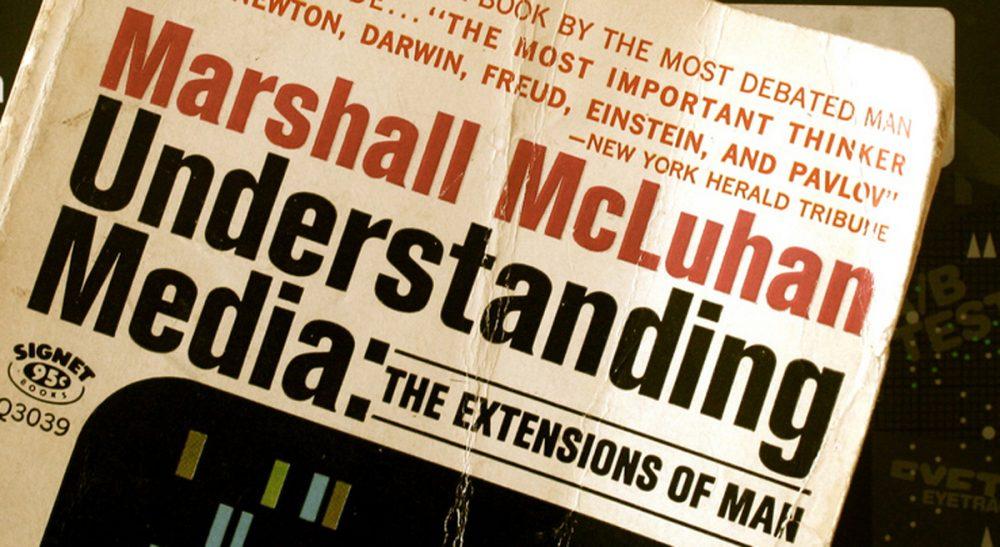
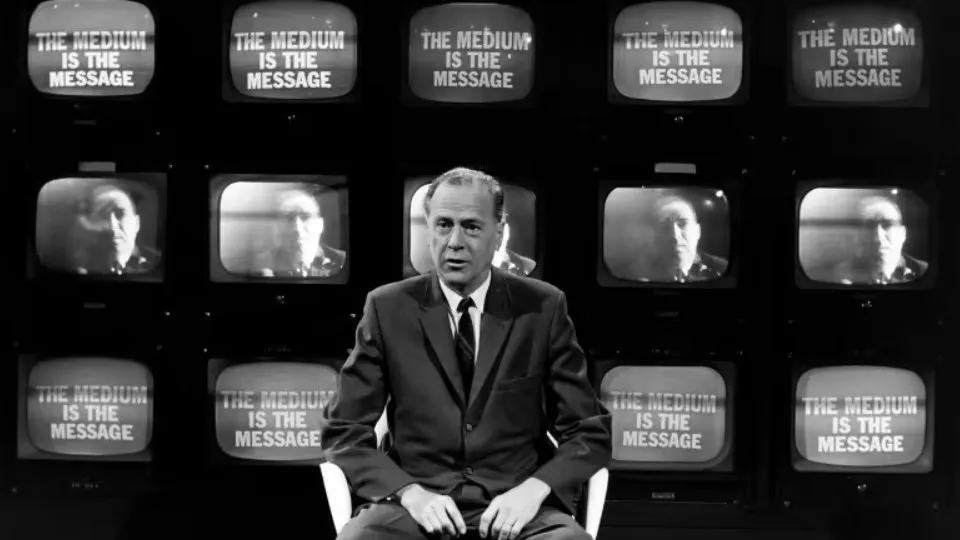
In an attempt to quell my own anxieties, I reflected on Marshall McLuhan’s “The Medium is the Message.” In this 1964 essay from Understanding Media: The Extensions of Man, the media theorist asserts that a medium contains content and character. The content is the obvious information that we see, a story or piece of music, for example. The character is less clear, a message often obscured by the content. Within a medium, this character provides an insight into how the medium shapes our engagement with it and shifts how we structure society. McLuhan writes, “For the ‘message’ of any medium or technology is the change of scale or pace or pattern that it introduces into human affairs.”
I am unsure if we can consider artificial intelligence a medium, but if it is, its inherent reliance on preexisting data could prevent it from creating music that rivals the innovation that can emerge from human intellect. While this consideration may assuage any fears about AI becoming the next pioneering force in music that provides irresistible, thought-provoking sounds, the very fact it wouldn’t be able to do that is concerning itself. If generative AI does come to hold a dominant presence in the music industry, what is its message? That making art is purely about recycling what already exists? That creativity is a task too demanding for humans, its burden unloaded onto technology instead? That the art we consume is meant to fade into the environment so we can direct our attention towards a feed instead? The latter is the future Endel is engendering, the one Liz Pelly fears. Even in a society with artificial intelligence, we will still be able to make music that pushes boundaries and forges uncharted paths. But will anyone want to hear it?
– Hannah Blanchette
March 17, 2025 | Blog