Save the Waves, Another Spotify Exodus, and Reflecting on Artist and Audience Resistance in the Music Industry
During my most recent browse of The Wire, Raymond Cummings’ review of the Save the Waves: People for Public Media compilation caught my eye. Save the Waves was released in late June with the intent of raising money to support PBS and bring awareness to its value in American society as it faces defunding and budget cuts, the album’s description stating, “It stands as a musical defense of truth, education, and universal access.” Organized by Mike Horn of NYC’s Seawind of Battery, the compilation draws in tracks from musicians who exist between the boundaries of folk, experimental, psychedelic, and ambient music such as Bill MacKay, Ernie Francestine, and Joseph Allred. Along with reading this review in these past few weeks, I’ve noticed disturbances in the streaming realm. A couple friends of mine jumped the Spotify ship, Apple Music unveiled a new feature to import playlists from Spotify to Apple Music — seemingly catering to the Spotify converts — and increasing numbers of artists pulling their music from Spotify’s catalog. All of these little moments had me thinking about the ways both artists and audiences show resistance in the music industry, how certain actions express discontent with how the mainstream industry assumes we want our media. The support for PBS and the exodus from Spotify demonstrate that we still have the ability to differentiate between the media we care about and that media which doesn’t care about us.
Save the Waves immediately brought to mind protest compilations of the past, common in genres such as punk, folk, and alternative rock. Raymond Cummings states in his review of Save the Waves that, “If Save the Waves isn’t quite the soundtrack to a resistance, it’s a reminder that righteous revolt requires some degree of respite.” While I agree that Saves the Waves’ dulcet instrumental tracks are atypical for what comes to mind when thinking of protest music, I then consider Pete Seeger’s simple banjo songs as he advocated for US labor movements. I think of Gillian Welch’s sparse acoustic number, “Everything is Free,” which conveyed a prophetic message about streaming and the devaluing of recorded music. Songs of resistance are not classified as so because of volume, genre, or any specific musical community tied to them, but what they resist through their content and what they contribute to a broader movement.
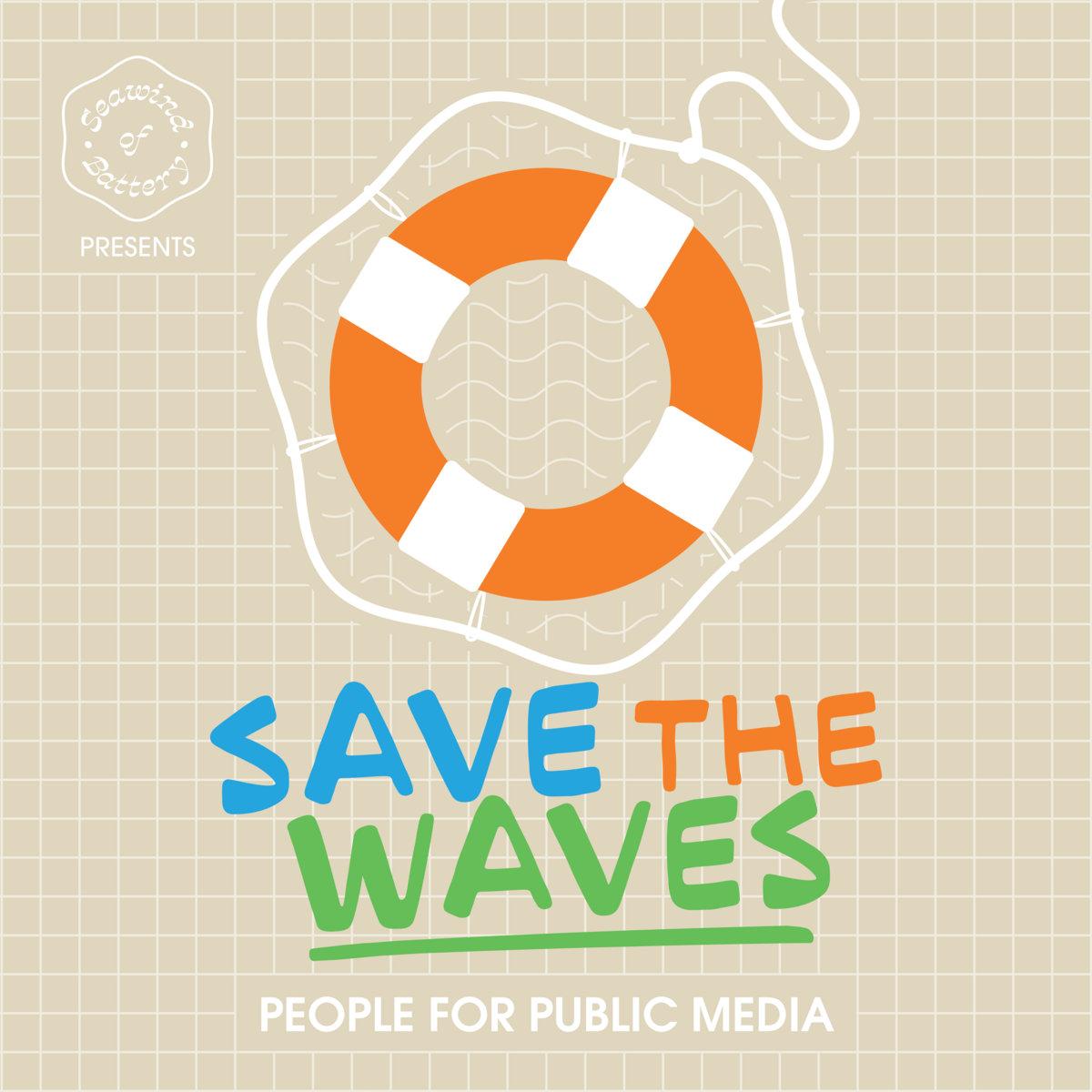
All of these points considered, the main difference between Save the Waves and other protest music is that the recorded album acts as a vehicle for resistance itself. The album and how its proceeds directly address PBS’ financial crisis is the resistance, not necessarily the contents of the music inside. And if anything, the album’s instrumental tracks allow listeners to ascribe their own meanings to what they are hearing, providing an openness to interpretation that can be more challenging with lyrical music. If Save the Waves contained a collection of lyrical tracks discussing the benefits of publicly accessible media and sharing individual PBS memories, there would be less room for the listener to draw upon their own memories and beliefs. More than likely, each one of us in the United States has a memory or several attached to PBS, and because of that Save the Waves benefits from the ambient, instrumental genres it explores. The pathos of Save the Waves lives in its ability to provide space for our own sentiments towards public media to drive us to resist the threats towards it as well.
Save the Waves isn’t the only recent example I’ve encountered of a musical artist’s acts of protest translating into audience resistance. Each time a particular artist pulls their music from Spotify’s catalog, whether it be Neil Young and Joni Mitchell’s temporary boycotts a couple years ago, or the most recent withdrawals of bands such as Godspeed You! Black Emperor, Deerhoof, Hotline TNT, and others from the service, it always seems like a chunk of Spotify’s users will follow suit. The conversation inevitably returns to whether leaving Spotify makes a difference in the broader streaming landscape, if switching to another streaming service perpetuates the issue, et cetera, et cetera. I do find that these discussions are important, as they force us to take stock of our personal choices and assess our values as music consumers. Every time an artist removes their work from Spotify, I reassess my status as an Apple Music user — Do I really still need a streaming service? Would it make a huge difference if I quit streaming altogether? Would my listening habits and music exploration benefit or suffer from removing streaming from my life? So far, I have still found myself sucked into the ease, convenience, and choice provided by streaming services, and I don’t want to pretend like I have found the perfect solution to the streaming dilemma in my own life. Quite frankly, I don’t think anyone has yet. All of this to say, when a musical artist takes a stand about whether their music will be available on Spotify, or any streaming service, it forces listeners to reevaluate whether they need to be on there too.
The pessimistic side of me sometimes wonders if protest compilations like Save the Waves or an individual user leaving Spotify makes enough of a difference in the broader music industry. Streaming services still dominate profits and listening habits. Even with Save the Waves’ proceeds, PBS is still under threat. But when I reflect further and distance myself a little from the overwhelming bigger picture, I do believe these small actions matter. Local scenes propping up the physical media circulating in their communities and forming their own ecosystems provide alternatives to mass consumption. Tuning into your area’s public media for information and entertainment, and providing monetary support when possible, helps disseminate accurate, expert knowledge and contribute to public wellbeing. Furthermore, it does make a difference when one person decides to leave Spotify or streaming altogether — it can change that one individual, who now embarks on a journey that will transform their personal relationship with recorded sound. While these issues may feel huge on the grand scale, the community level of resistance is attainable and ultimately, seismic.
– Hannah Blanchette
September 3, 2025 | Blog