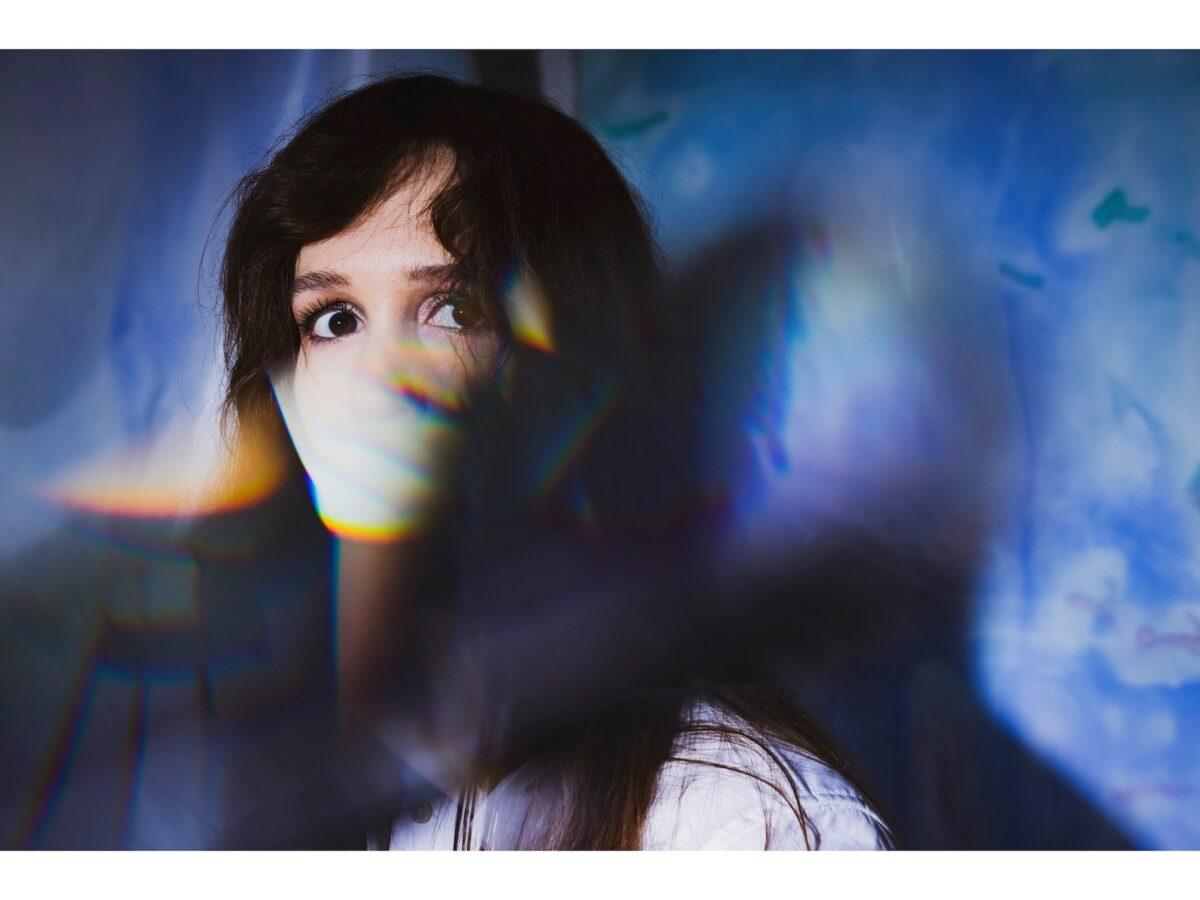
Real Life: Marie Davidson, Identity Formation, and Albums as Snapshots Into the Contemporary Working Musician
It’s been a little while since I did a classic, artist profile-style blog, so I reflected on who I’ve been listening to on repeat recently that warranted a deep dive. I realized that a large portion of my listening has been devoted to the Montreal-based electronic musician, Marie Davidson. Davidson has appeared on my radar for a variety of reasons in the past few months and her minimal dance tracks have wormed their way into my daily soundtrack riding the bus, walking downtown, and lazing around my apartment. In April, I wrote an Absolute Sound review of Davidson’s release from earlier this year, City of Clowns, a record that I should have listened to at the club instead of on my couch, because my body was essentially ripped off my couch and forced to move. Last month while record shopping, I stumbled upon a used check-condition-copy of her record, Adieux Au Dancefloor. The condition passed muster, and I scored that thrilling album for eight dollars. In light of these experiences, I realized I love when it feels like an artist is continually thrown into your orbit, making it impossible to not have them in heavy rotation.
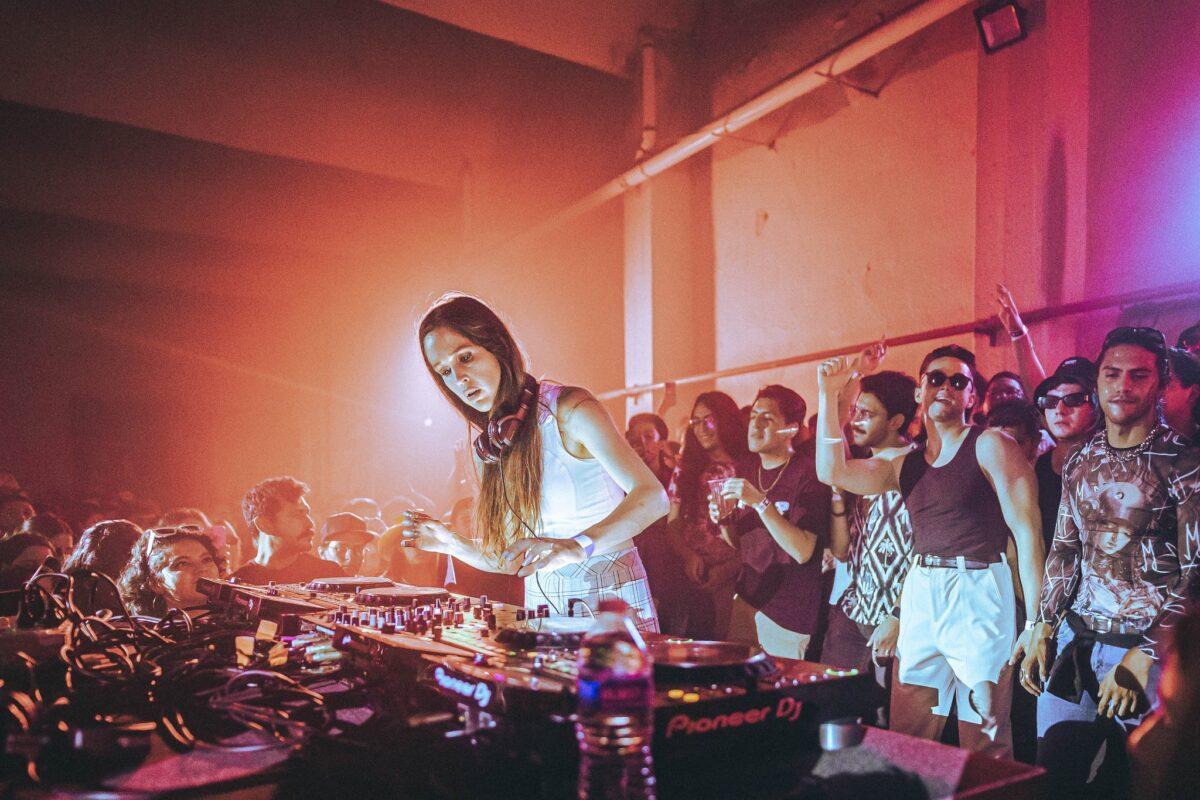
Marie Davidson’s solo studio albums over the past near decade drop the listener into different points along her evolving relationships with club culture, dance music, being a working musician, work addiction, psychology, and technology. With each release, Davidson explores a distinct facet of herself and how it changes with time and experience. Adieux Au Dancefloor (2016) examines Davidson’s fraught relationship with club culture, a scene which exhausted her as much as it exhilarated. Working Class Woman (2018) dives into the hustle mentality behind being a working musician and the frustration and damage that results from an addiction to work. City of Clowns (2025) ruminates on the reduction of music (and society as a whole) to data and surveillance, a reality every working musician today must reckon with. Through these records, Davidson often expresses the concepts she is wrestling with through her musical choices as well. Although Davidson took a break from electronic music to pursue other genres through her collaboration with Pierre Guerineau and Asaël R. Robitaille as L’Œil Nu on Renegade Breakdown (2020), she returned to electronic music with City of Clowns, acknowledging to Clash how “a part of [her] will always be an electronic musician.”
Adieux Au Dancefloor, which translates to “farewell to the dancefloor,” was oddly enough her most club-music styled solo record to date at the time, when compared with her 2015 record, Un Autre Voyage. This record marks one of the first solo creative projects Davidson released that depicts her grappling with her relationship with club culture. Juxtaposed with experimental techno and EBM tracks are Davidson’s musings on the potential for “destructive habits and behaviors” from a life immersed in the club scene. Davidson experienced some of these habits and behaviors herself through addictions, and found herself struggling to reconcile these detriments with the parts of the club she loved. She wrote Adieux Au Dancefloor as a dance record in part to participate in these positive aspects of the club. Davidson said to The Fader, “Dance music also has the power to get people to connect together without having to talk because of something called groove. I was curious to know if I could make it happen, so I tried.” However, the title Adieux Au Dancefloor was speaking the truth, as Davidson would soon retire from club performances after the exhaustion from the scene, setting the stage for her next solo studio album.
Working Class Woman evolved out of the aftermath from Davidson’s intense touring schedule and fatigue still lingering from the club music circuit. For four years, Davidson toured constantly and put out three solo albums within that timeframe, not to mention the various other musical projects she participates in. The persistent stress and activity lead Davidson to develop chronic insomnia and an addiction to sleeping pills. Davidson confronted the addiction and insomnia, and the experience lead her to reflect on how work can be an addiction as well, setting the stage for the themes in Working Class Woman. Written with Davidson’s signature wry humor, the album critiques the capitalist underpinnings of productivity and hustle mentality, the mental heath detriments of constant work, and the feeling like you need to be accessible at all times. The latter is intensified by the digitally connected world we live in, and Davidson advises that people need to step back from that technological overload more often. She told VICE, “People should try to know themselves better, and get off the internet once in a while. Be in reality, live, talk to people in real life, not only online.” These sentiments laid the groundwork for her following solo studio album that would come out seven years later, after Renegade Breakdown in between.
City of Clowns depicts Davidson looking outwards a bit more, while still looking inwards, her sights set on the effects of surveillance capitalism on relationships and society. As she told Clash, “This album ended up being more political than my previous work. I’m struggling to navigate the world we currently live in.” Her ideas for the album became fully fleshed out after reading Shoshana Zuboff’s The Age of Surveillance Capitalism, an immense text that dissects how corporate entities exploit user data for their gain. Davidson became especially interested in how surveillance capitalism influences human behavior, and how knowing that we are being watched through our devices effects how we interact with one another and how we perceive ourselves. Davidson felt that an electronic musical approach was the appropriate mode for exploring the technological themes of her record, and she even took it to the extreme by using Amazon’s text-to-speech tool Polly as the voice for the opening monologue of the album. After the pandemic, Davidson began DJing professionally, something she had never done before, which shaped how she approached her songwriting as well, considering whether a song was written ready for the dancefloor. Davidson’s openness to allowing her experiences to shape her music suggest that her albums will be perennially compelling going forward, her musicianship defined by curiosity and flexibility.
In a December 2024 conversation with Kaput, interviewer Katja Ruge asked Davidson, “Are you able to share the process of evolving your identity with us?” Davidson replied, “I’m too self-aware to witness the whole evolution process of my own identity. I have to wake up and live with myself everyday, which makes it hard to analyse or deconstruct.” I completely understand Davidson’s response — it is often incredibly challenging to gain a big picture sense of how your life and identity have developed because you are constantly living it, day-by-day, at the granular level. However, I do believe that Davidson’s solo studio albums provide a glimpse into her evolution, snapshots of her journey with reconciling the worlds of music, dance, clubbing, DJing, work, addiction, relationships, mental health, and technology, with each of these having interwoven or frayed apart at different points along her path. Davidson’s story as seen through her records is very much her own, and yet it is also a broader reminder of how the assorted aspects of one’s life can converge and splinter, sometimes joyfully, others painfully, often slowly, to form identity.
– Hannah Blanchette
July 15, 2025 | Blog