Field Notes on Field Recordings
Lately, I’ve tried to listen to music less while walking around the city. I have been a chronic headphones user since a very young age, and from the second I went to college to this day, I developed a reputation for walking quickly with headphones in, oblivious to any friend who attempts to capture my attention (who will often tell me of the encounter later, of which I have no recollection). Once spring arrives, I get the urge to be more attentive during my time outdoors and soak up the ambience around me that ranges from birds to sirens to conversational fragments. It always seems like there is more to listen to in spring, although I really shouldn’t reject winter soundscapes, which offer the stark silence intercut by the crunch of snow under your feet. But, I generally go for more walks in the spring in an effort to capture that brief interlude in Cincinnati when the weather is warm and inviting, the trees are in vibrant bloom, and the oppressive humidity of summer has yet to set in.
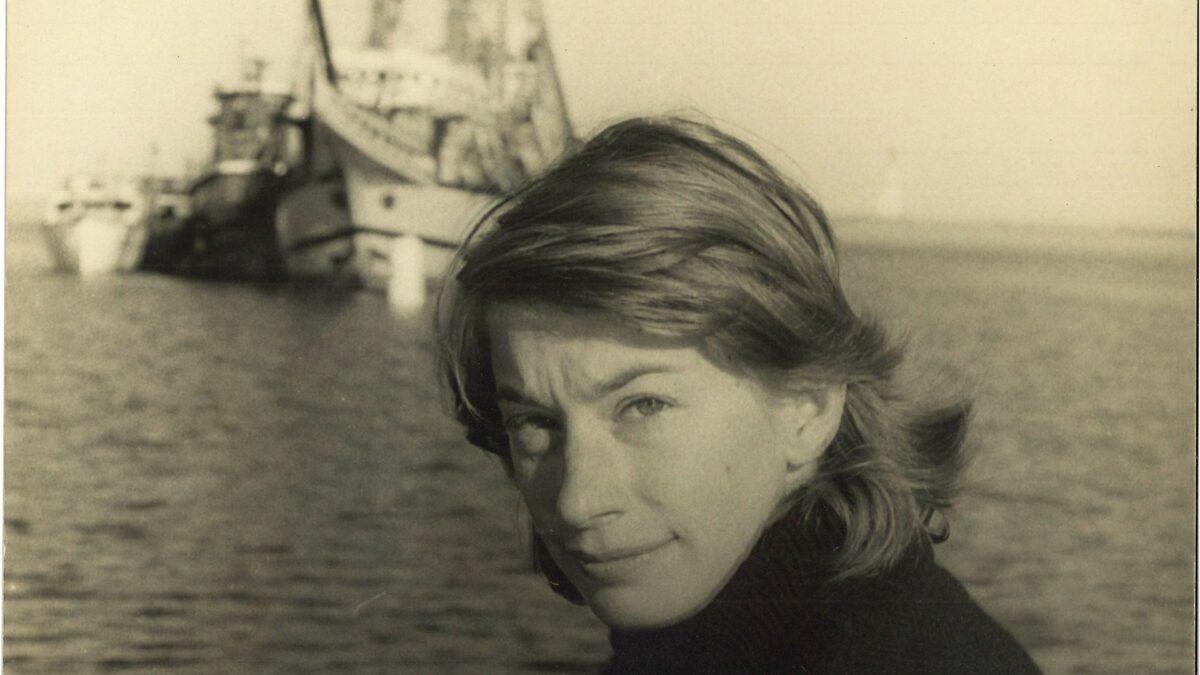
Another facet of this recent development relates to a conversation I had my with mom about the poet Mary Oliver. We discussed how one aspect of Oliver’s person that I most admire is how present she was, especially when she went for walks around her home in Provincetown, Massachusetts. No music, walking alone, nothing except being in the moment and observing every minute detail around her. I mentioned how much Oliver’s approach inspired me as a writer, and how Oliver’s ability to be present proved that the act of writing was only a portion of what it means to be a writer. Instead, being observant and curious in the everyday was an equally significant aspect of the writer’s life, or of any creative life. And what do you know, I spontaneously went for what I now call a Mary Oliver Walk (no distractions, just walking, listening, and thinking), and I came up with the final pieces that pulled my ideas together to write this very blog. Much of Mary Oliver’s poetry focused on nature, which is also prime material for field recordings as well. While some albums categorized as field recordings, such as Folkways’ Sounds of the Office or Ernest Hood’s Neighborhoods document sounds that are not necessarily associated with the natural world, a large portion of the field recording genre is devoted to nature. Perhaps this tendency is for a similar reason that Oliver gravitated towards nature in her writing: awareness of our surroundings within the natural world is worth noting and preserving.
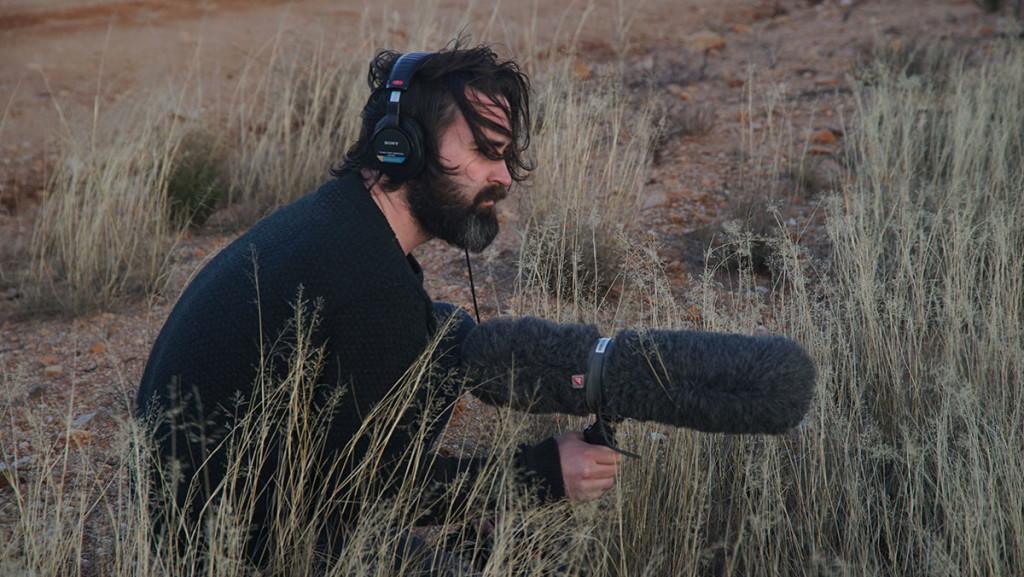
I recently read Joshua Minsoo Kim’s Pitchfork review of Joshua Bonnetta’s The Pines, a four-hour-long field recording opus of a singular pine tree situated in upstate New York. The album culls from 8,760 recorded hours spanning each of the seasons, with about one hour devoted to each time of year in the final product. Kim notes how The Pines blurs the boundary between field recording as authentic artifact of a soundscape and field recording as curated sound collage. He writes, “The Canadian artist eschews ‘authentic’ reproductions of any space, openly embracing subjectivity,” later adding that Bonnetta “finds truth in the edit.” Kim references Bonnetta’s career as an experimental documentary filmmaker in addition to being a sound artist, which I found especially compelling given that I believe field recordings and documentary films to be incredibly similar genres. Just as every frame in a documentary is shaped by the person holding the camera, so too is a field recording molded by who sets up the microphone. Bonnetta even noted in his interview with The Ithacan while promoting his 2016 record that, “I was trying to change the sound so that they would align more with my experience and the feeling of what I got from that place, and in that sense, it is more fiction.” Even with Bonnetta’s more explicitly manipulated approach, I don’t believe that this fact makes field recordings any less authentic representations of the soundscapes they capture. Instead, field recordings teach us about perception, encouraging us to reflect on how each of us individually experiences listening. Why do we perceive what we perceive? How can the curated environments of a field recording encourage us to practice more active listening in our own daily lives?
Too often, we take listening for granted. We don’t think about what we are hearing or we don’t even register that we are hearing anything at all. Of course, we can’t actively listen to every sound around us all the time, or we’d never be able to function. But there is also a benefit to taking the time to connect with the sounds around us, situating ourselves in our environments and considering our own sounds as intertwined with those we coexist with. There is a reason John Cage composed a piece of silence, a piece that reminds us of the musicality inherent to our surroundings. Pauline Oliveros developed Deep Listening because she recognized the artistic value in connecting your listening with your environment. Field recordings are artifacts that remind us of the sounds we sometimes ignore, imbuing them with the value they deserve. They also remind us that each person may hear a space differently from one another, or even within themself, perceiving varying moments depending on the day, their mood, or who they’re with. Like Mary Oliver’s poems, which conveyed her perceptions of the tiniest elements of nature, a field recording communicates the auditory experience of the individual. Oliver once stated, “It has frequently been remarked, about my own writings, that I emphasize the notion of attention. This began simply enough: to see that the way the flicker flies is greatly different from the way the swallow plays in the golden air of summer. It was my pleasure to notice such things, it was a good first step…Attention without feeling, I began to learn, is only a report. An openness — an empathy — was necessary if the attention was to matter.” We should embrace the subjective in our everyday listening, and find the art within that.
Last summer, I camped in Red River Gorge with a friend, my first time in almost a decade. On the first night, tucked away in our little site nestled in the middle of the woods, we sat in silence by the fire for awhile. But although we were silent, the woods were not. A chorus of whippoorwills performed in the trees above, their lilting calls sometimes offbeat, other times interlocking, the polyphony they created reminiscent of a Steve Reich phase. The most beautiful, transcendent performance I’d ever heard, the most original improvisation I could ever hear. That’s what my ears picked up, but what my friend listened to and felt could have been entirely unrelated. My life and background shaped that moment for me, and if I hear those whippoorwills again ten years down the line, I may perceive something different. Even amongst all the subjectivity in moments like the whippoorwills, the objective I do know is that we were present and listening, and there is so much to be gained in just that.
– Hannah Blanchette
April 29, 2025 | Blog